Puff files built with full foam coverage and sealed edges, so bold letters stand tall, corners stay clean and no foam peeks through after the tear-away.
3D puff is the raised, rounded lettering you see standing off the front of a cap. It is not a thicker thread or a trick of density. A sheet of foam sits under the stitches; the machine sews dense satin over it; the foam outside the design is cleared away; and the foam trapped under the thread holds the stitches up in a soft, bold ridge.
A flat file cannot do that job if you simply lay foam under it. Flat columns are too narrow, their density is too open, and their ends are not closed. The needle cuts the foam poorly, edges fray, and foam pokes out at every tip and corner. A puff file is a different build from the ground up: wider shapes, a density set to cover foam fully, and ends shaped to wrap and seal.
Because the foam adds height, puff rewards bold art and punishes fine art. A thick block letter becomes a clean, proud shape. A thin script line becomes a torn, fuzzy one. Part of our job is to look at your design with honest eyes and tell you which parts belong in puff, which belong flat, and which should be left out of the puff version entirely.
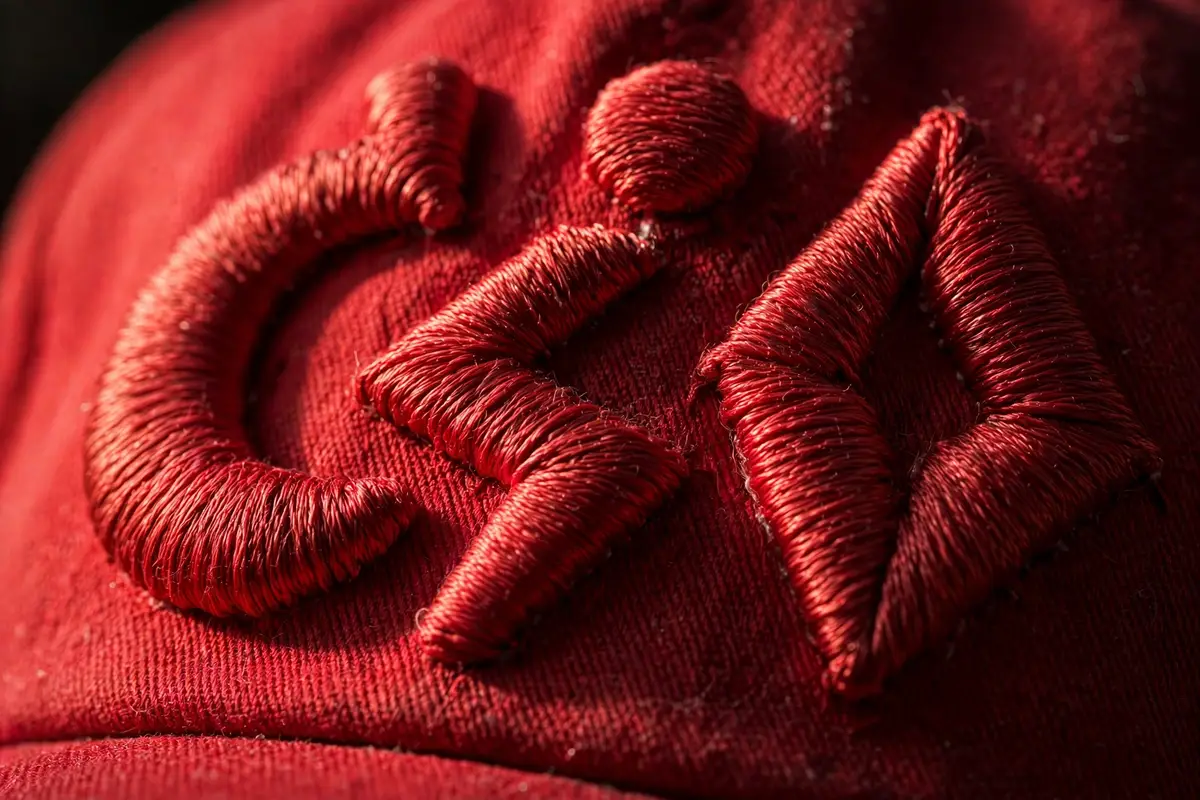
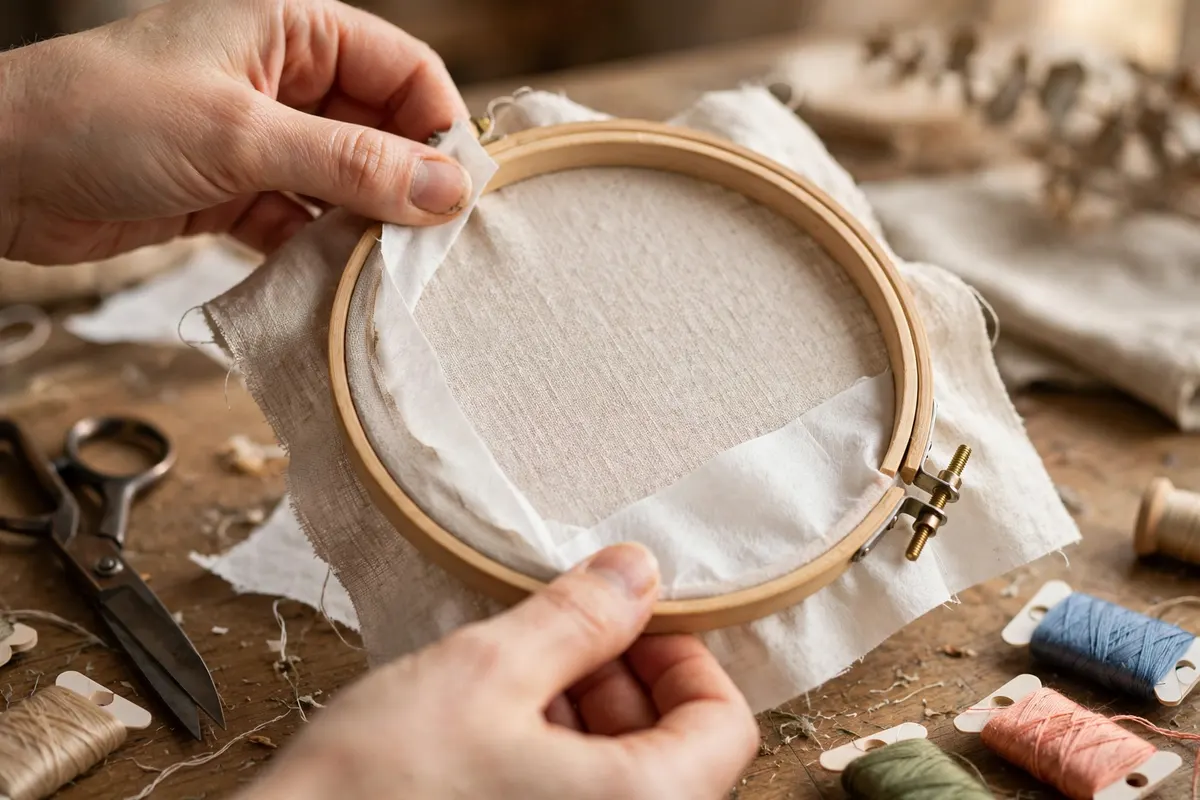
The structured cap front is puff’s natural home. The panel is firm, so it does not flex away from the foam. The design area is wide and short, which suits bold letters. And the raised look reads from a distance, across a field, a shop floor or a street — the places caps are actually seen.
On a cap, a puff file must also respect the cap rules. The build sews with the curve and the center seam in mind, keeps the height inside the safe limit for the cap style, and gives the seam area its extra support. Puff over a seam is less forgiving than flat work: a column that lands badly on the seam can show a weak spot in the raised surface, so we plan crossings with care.
Unstructured caps are a different story. Their soft fronts can flex under the foam, and the raised shapes may sit unevenly. For those, flat embroidery usually gives the cleaner result, and we will tell you that before you spend money on a puff build that fights the cap.
Beyond caps, puff can sit well on heavy jackets and other firm garments, often as one raised word or mark inside a mostly flat design. Mixed designs — puff for the main word, flat stitch for the supporting detail — are often the strongest of all, because each part uses the method that suits it.
Three things decide whether a puff sew-out looks clean or rough: coverage, corners and sealing. Coverage means the satin stitches sit dense and even enough that no foam shows through the face of the letter. Too open and the letter looks hairy. Far too dense and the needle shreds the foam edge and strains the thread. We set density for the foam thickness you plan to use, which is why we ask about it at order time.
Corners are where puff art most often fails. A sharp point in the artwork becomes a weak tip in foam: stitches bunch, the point tears, and the tip curls or pokes out. We round the corners of puff shapes, widen narrow joins, and drop spikes and serifs that cannot hold. Your letters keep their bold character, but their geometry becomes foam-friendly.
Sealing closes the deal. At the end of each column and shape, the stitches wrap over the foam tip so that when the spare foam is pulled away, nothing raw is left showing. We build those caps and end wraps into the file at every tip, join and letter end. A gentle heat pass or careful clearing on your end finishes the job, but the clean edge is won or lost in the digitizing.
Thread choice helps the surface too. A smooth, strong thread in a color close to the foam color hides any micro spot where foam might peek. Your order notes will list the thread order and the foam color guidance that matches your design.

You receive a puff-specific file — not a flat file with a note — built for your garment, your foam thickness and your machine format. The pack includes a preview that shows which parts are raised and which stay flat, plus a thread list in sew order and a note on foam color and thickness.
Standard delivery is 24 hours, with rush in 4–8 hours on request. Sew a test on a spare cap or scrap first: puff uses real foam and a real garment, and a test shows the height and edges before a full run. Revisions are free until the file runs clean.
Pricing stays simple: 3D puff adds $7.50 to the base design price. A cap or logo design up to 4.5 inches is $13, so the puff version is $20.50 all-in for the digitizing. Add puff to a jacket back at $37 and the total is $44.50. The final quote is confirmed before work starts.
Bold art and a firm garment — we will check both with you first.
Send the design, the garment type — cap style if it is a cap — the finished size, and the foam thickness you plan to use if you know it.
We confirm which parts go raised, which stay flat, and any corner or letter changes the foam needs. You see it all in the preview before we build.
Sew one test piece with your foam, clear the excess, and check the edges. If a tip or corner needs work, the revision is free.
Many designs can gain a puff version with a few honest changes.
Start with the letters. A medium-weight font often needs to become a bolder cut of itself: thicker strokes, wider spacing, rounder ends. Outlines around letters usually come off, because a thin outline cannot hold foam and tends to tear at its edges. A drop shadow in the art can stay, but it reads better as a flat stitched shadow under a raised main word than as a second raised layer.
Shapes follow the same rule. Keep the big, simple forms; drop the confetti. Stars become fewer-pointed and thicker. Thin swooshes become bold bands or flat accents. None of this betrays the design — it translates the design into a medium with real thickness, the same way a logo is translated for a chest or a cap.
If you are unsure whether your art can carry puff, send it anyway and ask. The advice at quote stage is free, and a clear “this one should stay flat” is a useful answer too. We would rather steer you to a sharp flat file than sell you a puff file that fights your artwork from the first stitch.
Care is simple once the cap is sewn. Brush loose foam bits away with a soft brush, check the tips of each letter, and store the cap so the raised work is not crushed flat for long periods. With normal wear and washing inside out on a gentle cycle, well-sealed puff keeps its height and its clean edge for a long time.
Builds that puff work is commonly paired with.
3D puff digitizing builds a design to sew over a piece of foam. The needle lays dense satin stitches over the foam, the excess foam is cleared away, and the covered part stays raised off the fabric. The file is planned for that foam from the start, with wider columns, denser coverage and sealed ends, so the raised shape looks smooth and sharp.
Bold, simple designs work best: thick block letters, chunky numbers, strong logos and basic shapes with rounded corners. Thin lines, small text, sharp points and fine detail do not hold foam well and can tear through the coverage. If your art is detailed, we can make a puff version of its boldest part and keep the fine parts flat.
When the extra foam is removed, any open end or weak corner will show white or colored foam poking out from under the thread. Sealed ends wrap the satin stitches around the tips of each shape and column, locking the foam in. Good sealing is planned in the file, not fixed after sewing, and it is what gives puff its clean, finished edge.
Caps are the most common home for puff because their firm fronts support the raised stitches well. Puff can also work on heavy jackets and thick garments with a stable surface. It is a poor match for thin, soft or stretchy tops, where the fabric flexes and the raised work can look uneven. Tell us the garment and we will advise honestly.
Use embroidery puff foam made for this job, in a color close to your thread so any tiny exposed spot blends in. Foam thickness changes the height of the finished look, so tell us the thickness you plan to use when you order. We set the density and column width for that foam, and your file notes will state the foam the build was planned for.
Send your design and garment on WhatsApp for a free puff quote. Puff adds just $7.50 to the base price, with delivery in 24 hours and free revisions.