Send any artwork and we will rebuild it by hand as a clean stitch file, planned for your exact fabric, finished size and machine. Standard delivery is 24 hours, with free revisions until the file runs clean.
A custom order starts with your artwork, not with a stock pattern. You might have a hand-drawn sketch, a print file from a designer, a photo of a pet, a club badge, or a piece of art that only exists as a phone picture. Our job is to translate that flat picture into a path the needle can follow, stitch by stitch, without losing what makes the design yours.
That translation is done by hand. Software can trace an outline, but it cannot judge where a fill should change direction, where a thin line needs to become a run stitch, or where two colors should overlap a touch so no gap of fabric shows through. A digitizer makes those calls one section at a time, in the order your machine will sew them.
The result is a file that knows its job. It knows the garment it will sit on, the size it will be sewn at, and the order that keeps registration tight. Resize a custom file far beyond the size it was built for and stitches will spread or crowd — that is why we ask for the finished size first and build to that size from the start.
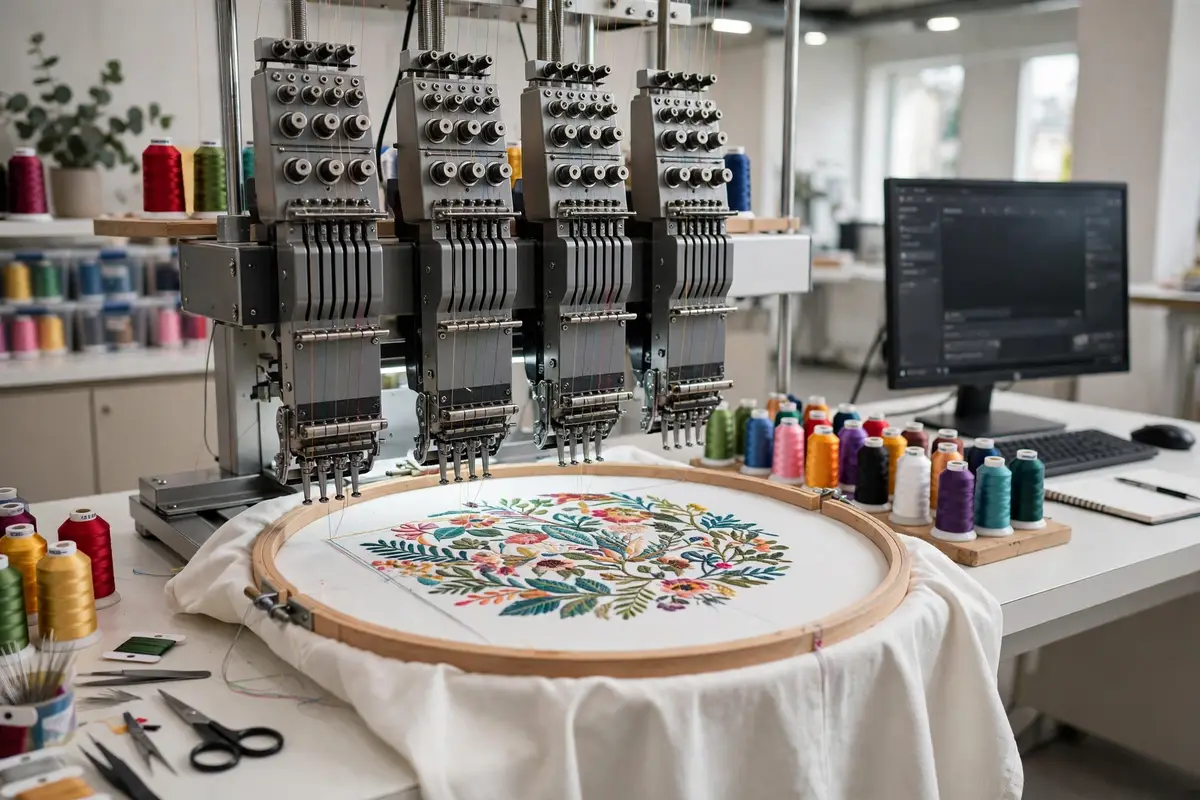
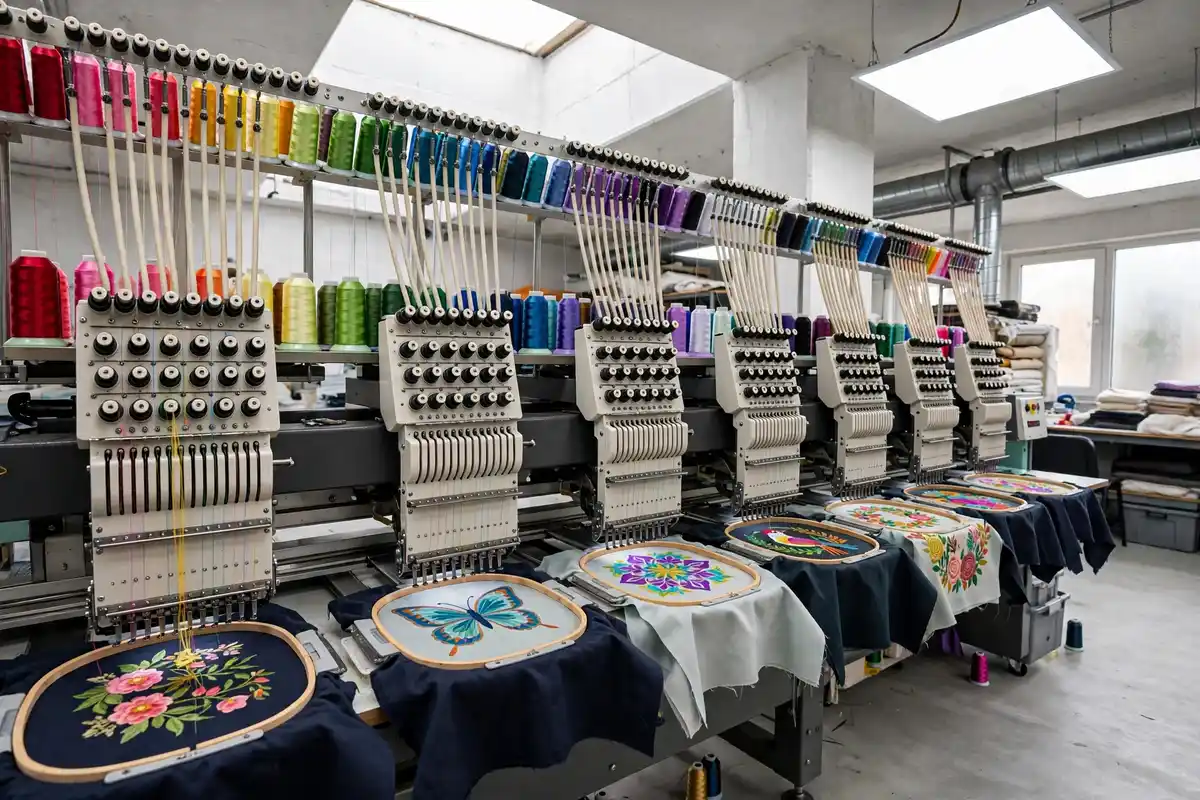
Every machine brand reads its own file type, and a file that runs well on one brand can stop or misread on another. We deliver in DST, PES, EXP, JEF, VP3, XXX, HUS, EMB, CND and PXF, so you get the exact format your machine asks for. Tell us your machine model when you order and we will match the file, the hoop size and the stitch limits to it.
Home machines and commercial machines also handle density in their own way. A dense fill that a heavy commercial head sews with ease can strain a light home machine and snap thread. When we know your setup, we set stitch length, density and underlay so the file runs at a steady pace instead of fighting the machine.
We also plan the sew order to cut down on jumps and trims. Fewer jumps mean less loose thread to clean up, fewer chances for a bird nest under the hoop, and a back of the work that looks tidy. If your design has many small color blocks, we group them in a smart order so you are not changing thread every few seconds.
Not sure which format you need? Send us your machine name and we will pick the right one. If you run more than one brand, ask for two formats in the same order and we will prepare both from the same hand-built master file.
Fabric is the part many cheap files ignore, and it is the part that decides whether a design looks sharp or pulls the garment out of shape. A polo knit stretches. A denim jacket barely moves. A towel swallows short stitches whole. The same artwork needs a different build for each one, and that build is the heart of custom work.
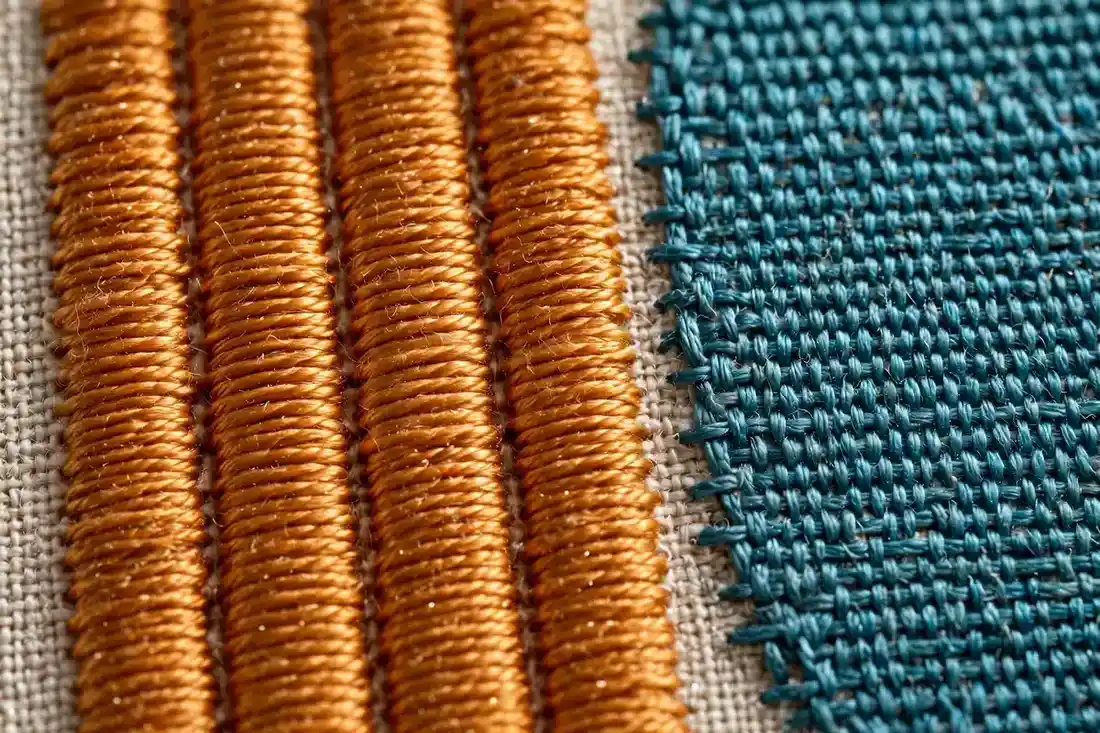
For fills, we use tatami stitch for large, flat areas because it lies smooth and wears well. For borders, letters and narrow shapes, satin stitch gives a raised, shiny edge — but only up to a safe width, after which we split it or switch the fill so stitches do not snag and pull out. For fine lines, outlines and vintage-style work, a run stitch keeps detail light and clean.
Underlay does the quiet work underneath. It pins the fabric to the stabilizer, raises the top stitches so they do not sink in, and gives satin edges a firm base. On stretchy cloth we add stronger underlay and pull compensation, which slightly widens shapes to allow for the inward pull of the thread. On firm cloth we ease off, so the design stays soft instead of stiff.
Density follows the same logic. Too dense and the garment puckers, the needle heats up and thread breaks follow. Too loose and fabric grins through the fill. We set density by fabric weight, thread type and finished size, then note it in the file so a revision can fine-tune one area without rebuilding the whole design.

Every order, large or small, goes through the same checks before it leaves the studio. We look at the design at full size and at sew size, because a gap that looks tiny on screen can show as a clear line of fabric on the garment. We check the sew order, count the color changes, and make sure no stitch is so short it will jam or so long it will catch.
You receive the stitch file in your format, a clear preview image so you can confirm colors and layout before you sew, and the thread color list in the order the machine will use it. If you sew a test run and one area needs a tweak, revisions are free until the file runs clean on your machine.
Small custom designs up to 4.5 inches start at $13, the same anchor as our logo, left chest and cap work. Medium work up to 8 inches is $23, and large jacket backs up to 12 inches are $37. If your design needs 3D puff, that adds $7.50. We confirm the final quote before any work starts, so there are no surprises after you order.
Ordering is kept short on purpose. Most orders start and finish on WhatsApp, with your artwork sent as a simple photo or file.
Message us on WhatsApp with your artwork, the finished size in inches, the fabric or garment, and your machine format if you know it. A clear phone photo is fine to start.
We check the artwork, flag any detail that needs a change at your size, and confirm the price and delivery time. Nothing is digitized until you say go ahead.
You get the file within 24 hours, or 4–8 hours on a rush order. Sew a test piece, and if any area needs a fix, tell us and the revision is free.
A few small choices at the start save time and give you a cleaner file at the end.
Vector files such as AI, EPS, SVG or PDF give us the cleanest lines to work from, but they are not required. A sharp PNG or JPG at a large size works well too. What matters most is contrast: dark lines on a light background, colors that are easy to tell apart, and text that is not blurred. If your only copy is a photo of a printed shirt, take it straight on, in good light, with the design filling the frame.
Tell us which parts matter most. If a face must stay true, say so. If background detail can be dropped to keep the stitch count down, say that too. Many custom designs sew better with a little less in them: tiny specks, thin pinstripes and soft shadows often read as noise in thread. We will suggest what to keep, what to simplify and what to drop, and we will show you the plan before we build the file.
One last note on size. Pick the largest size you plan to sew and tell us if you also need a small version for a chest or sleeve. A design built for a jacket back will not shrink cleanly to two inches, because the stitches themselves have real width. Two sizes means two builds, and planning both at once keeps the pair consistent in color and style.
Focused versions of custom digitizing for common placements and jobs.
Any artwork that is not a plain stock design counts as custom. That includes your own drawing, a business logo with extra detail, a family crest, a pet portrait outline, or artwork made for one garment only. You send the art, the size, the fabric and the placement. We build the stitch file from scratch for that one job, not from a template.
Yes, we can work from a clear photo. A photo first needs to be simplified into shapes the needle can follow, so fine shading becomes clean blocks of color and stitch direction. Send the sharpest photo you have and tell us the finished size. We will tell you honestly what detail will hold and what needs to be simplified before we start.
Tiny lettering needs special care. Letters under about five millimeters tall often fill in if they are digitized like normal text. We widen letter spacing, open up closed loops, and use a thin run stitch where a satin column would clog. If a line is too small to read at your chosen size, we will suggest a slightly larger size or a simpler font.
We ask about your fabric before we start, then match the stitch to it. Light, stretchy fabric gets lower density, more underlay and shorter stitches so it does not pucker. Heavy fabric like denim or canvas can hold denser fills and longer satin stitches. The goal is a file that sits flat, feels soft enough to wear, and runs without thread breaks on your cloth.
Yes. If you want a flat tatami fill, a shiny satin look, a vintage run-stitch feel, or a mix of styles in one design, tell us when you order. We will plan the design around that style and flag any spot where that stitch would not hold up well. Your preference leads, and we will explain any trade-off in plain words before we build.
Send your design on WhatsApp for a free quote. We will check the size, fabric and detail, confirm the price, and deliver your file in 24 hours.