Large back designs digitized for even coverage without the stiff, heavy feel — planned in sections when your hoop needs it, and delivered in 24 hours.
A jacket back is the largest common canvas in embroidery, and it changes the rules. A design that covers most of a back panel can carry rich detail, layered shading and bold lettering that would never fit on a chest or a cap. It also runs for a long time, uses a lot of thread, and puts real stress on the fabric for every minute it sews. A weak file does not fail fast on a jacket back — it fails slowly, an hour into the run.
That is why planning leads everything here. We map the design across the whole panel before a single stitch is placed: where the heavy fills sit, where the detail clusters, how the sew order travels so the jacket is not dragged in one direction for an hour. Large designs pull fabric from all sides, so a balanced path is the difference between a flat, proud back piece and one that warps as it grows.
We also plan for the jacket as clothing, not as a board. A back panel bends when the wearer sits, reaches and folds the jacket over an arm. A design digitized as one solid slab of dense thread will fight all of that. Our builds keep the art bold while keeping the jacket a jacket — flexible enough to wear all day, firm enough to hold its shape for years.
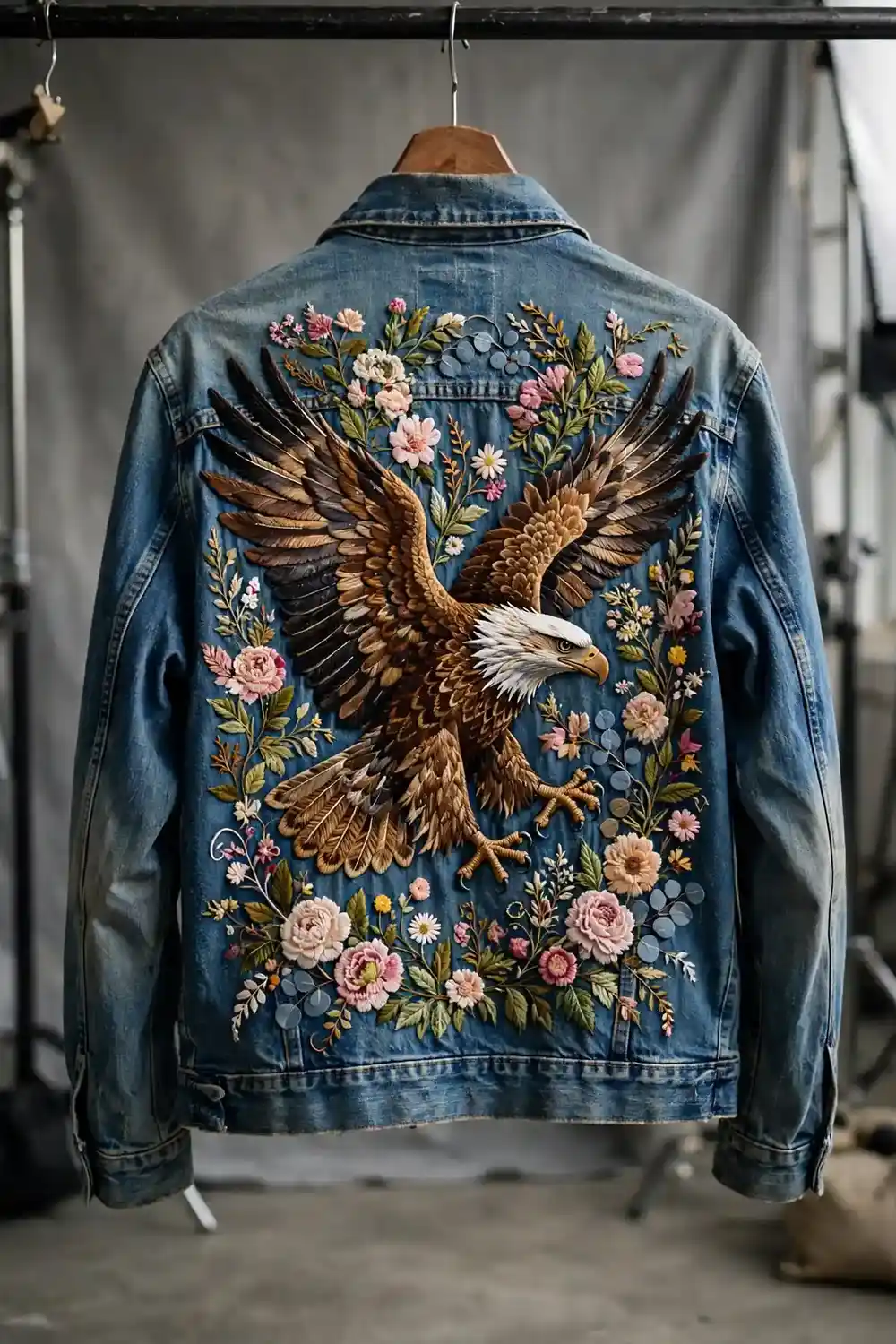
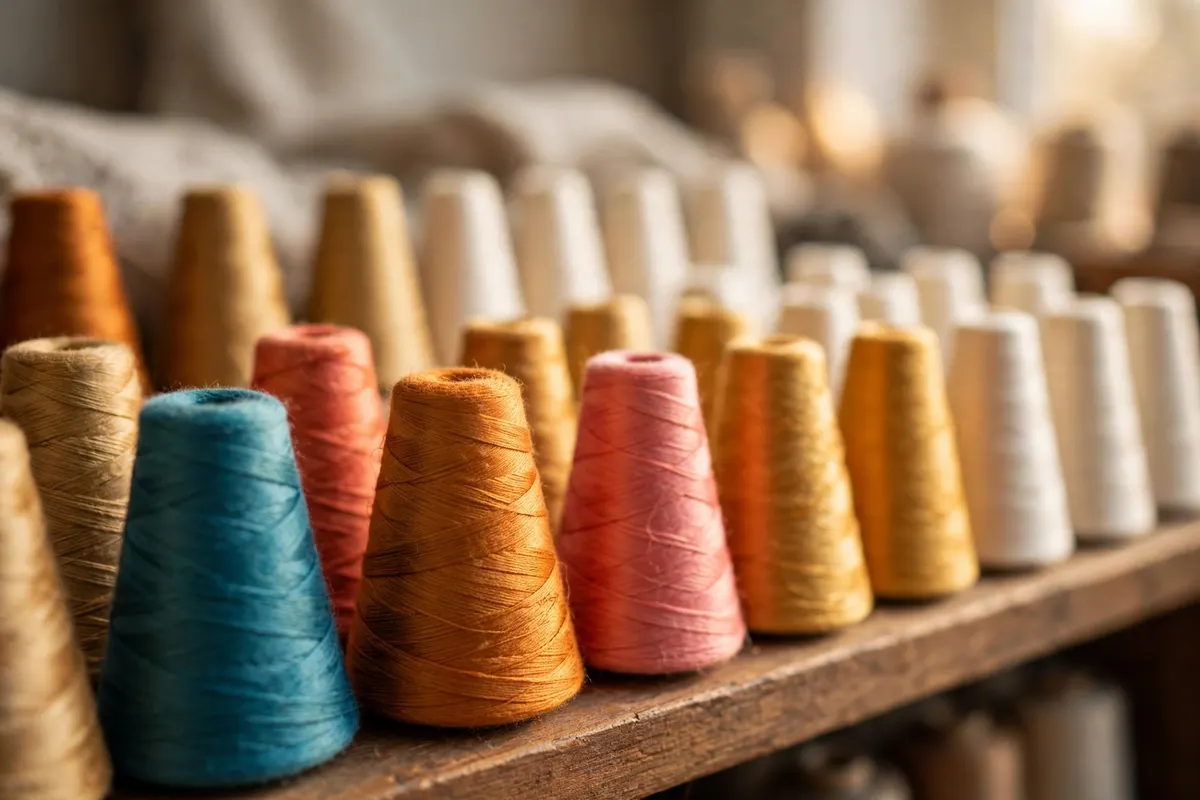
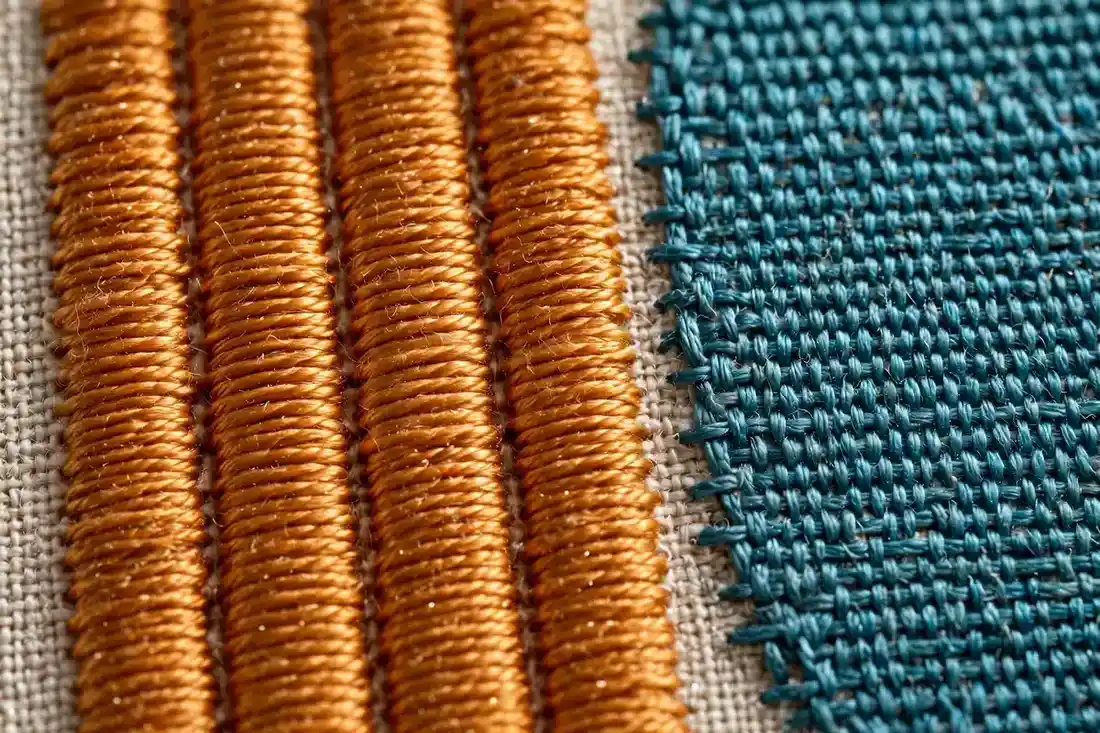
The best large designs rarely stitch every square inch. Appliqué — where a piece of fabric forms a large shape and embroidery secures and details its edges — can replace a huge solid fill with a light, clean panel of cloth. It cuts stitch count, cuts run time, and gives big shapes a smooth face that thread alone struggles to match. If your art has large flat areas, we may suggest appliqué for them; it adds $4.50 to an order and often saves far more than that in time and wear.
Open space works the same way. Letting the jacket fabric show as a color in the design — the denim blue as sky, the black twill as shadow — lightens the build and ties the art to the garment. A design that breathes wears better, folds better and, frankly, looks more like craft and less like a printed poster copied in thread.
Where fills do run large, we vary stitch direction and use textured fills to create light and shade. A wing, a wave or a mane can be shaped by direction changes alone, without adding darker thread or extra density. That keeps coverage even, because sudden density jumps across a big area are a common cause of puckers and thread breaks late in a long run.
Lettering across a jacket back gets room to be itself. Arched names, bold block words and banner text can be set at sizes where satin stitches shine and every letter stays open and readable from across a room — which is exactly where a jacket back is meant to be read.
Stand close to a good jacket back and you see the craft: stitch direction turning with the shapes, fine run-stitch detail, satin edges with a clean shine. Step back ten paces and a different test applies — the design must read as one clear picture, not a busy patch of thread. We digitize for both distances at once.
That means strong value contrast in the plan. The main shapes are kept bold and separated, so they hold together from far away. Fine detail is placed where a close viewer will find it, but the design never depends on that detail to make sense. If a small element would vanish at distance or clog up close, we resize it, merge it or drop it, and we show you the change in the preview at both a full view and a close view.
Stitch texture also protects the design in daily use. Very long stitches on a large exposed back can snag on chair backs, straps and seat belts. We keep stitch lengths in a safe range on open fills, save long satin for edges within safe widths, and avoid loose, floaty elements on parts of the back that rub the most.
Color planning matters more at this size too, because a long run with many color changes costs real time at every stop. Where the art allows, we group colors sensibly and order them to cut jumps across the panel. Your thread list arrives in sew order, so the run flows instead of stopping and starting across the design.

You receive the full-size file in your machine format, an estimated stitch count and run time, a preview at full view, and a thread list in sew order. If the design is split for a smaller hoop, you receive each section file with a simple joining map and alignment marks explained in plain words.
Delivery is 24 hours as standard, with rush in 4–8 hours on request. Given the run time of a large sew-out, we strongly suggest a test on a similar spare fabric first — a jacket is a costly blank, and a test is cheap insurance. Revisions are free until the file runs clean.
Jacket backs up to 12 inches are $37. Smaller chest work starts at $13 for comparison, and medium designs up to 8 inches are $23. If your back design is larger than 12 inches or needs many sections, we quote it clearly before any work starts.
Large work rewards a careful start. These steps keep it simple.
Send the artwork, the jacket fabric, the width you want and your largest hoop or frame size. Those four facts shape the whole plan.
We confirm price, estimated stitch count and run time, and whether the design sews in one hooping or in planned sections.
Run a test on spare fabric of a similar weight. Check coverage and flexibility, then sew the real jacket with confidence.
Denim, varsity and work jackets each ask for a different hand.
Denim is the kindest base for large embroidery: firm, stable and happy to hold detail. A denim back can carry richer fills and finer texture work, and it forgives a lot. Even so, we watch the total weight of thread on very large designs, because a heavy design on a light denim can still pull the panel out of shape over a long run.
Varsity and letterman-style jackets often mix wool-like bodies with different sleeve and trim materials. The back panel itself is usually stable, but it can be softer than denim, so fills go a touch lighter and underlay does more of the holding work. Work jackets in canvas or heavy twill sit near denim in behavior and take bold, high-coverage art well — a natural home for club, crew and brand back pieces.
Thin fashion jackets and soft shells need the most care. There we lean harder on open space and appliqué, lower the density, and may suggest a slightly smaller finished size. Tell us what you have, send a photo of the jacket back if you can, and we will match the build to the garment in front of us rather than to a guess.
Techniques and sizes that pair with large back work.
Most jacket back designs run from about eight inches up to twelve inches wide, and our standard jacket back price covers designs up to twelve inches. The true limit is your hoop or frame size and the back panel of the jacket itself. Send the jacket type and the width you want, and we will confirm the largest size that will sew cleanly on your setup.
Stiffness comes from solid, dense fills covering a large area. We break big areas into lighter fills, use stitch direction and texture to suggest shading instead of packing in more thread, and leave smart open space where the art allows it. The design still reads bold from a distance, but the jacket can still bend, fold and be worn in comfort.
Yes. If a design is larger than your hoop, we can split it into sections with clear overlap points and alignment marks, so you can re-hoop and join the parts with no visible gap. Splitting takes planning: the art is divided along natural lines in the design where a join hides best. We will map the sections with you before we build the files.
A full jacket back design often runs into the tens of thousands of stitches, and the exact count depends on the size, the coverage and how much open space the art has. We will give you an estimated stitch count and run time with your quote, so you can plan machine time honestly. We keep counts as low as the design allows without losing coverage.
Firm jackets give the best base for large work: denim, canvas, twill work jackets and varsity-style jackets with a stable back panel. Soft, thin or very stretchy jackets can still carry a design, but the build must go lighter and the stabilizer choice matters more. Tell us the jacket fabric and weight when you order so density and underlay match it.
Send your artwork, jacket type and hoop size on WhatsApp for a free quote with a stitch estimate. Jacket backs up to 12 inches are $37, ready in 24 hours.