Ari lines and cutwork: the delicate end of the craft
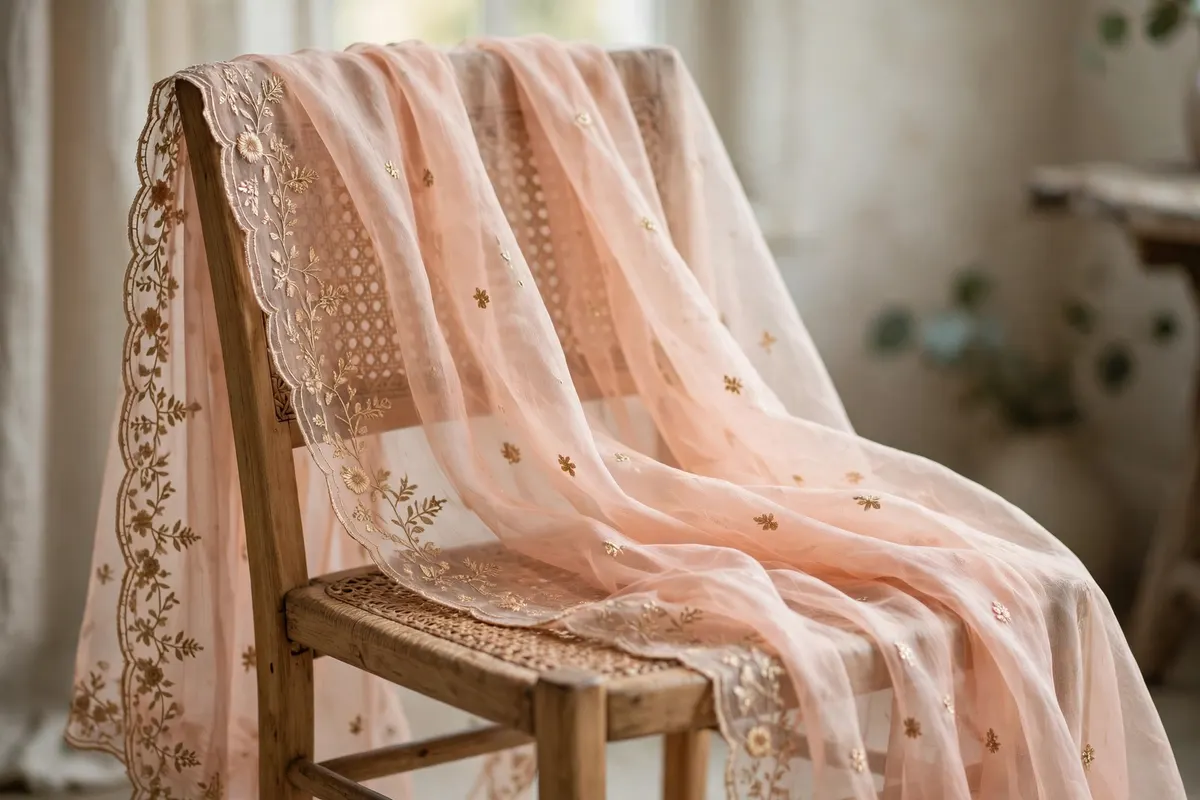
Ari work began as hand embroidery done with a hooked needle, building chain stitches into vines, outlines and soft fills. On a machine, we rebuild that character with chain-effect paths: fine, linked lines that flow around curves without the hard edge of satin stitch. Ari-effect digitizing suits the designs satin cannot serve — trailing florals on chiffon, delicate dupatta sprays, soft outlines on silk. The spacing must stay even or the chain look breaks into dashes, and the path must avoid sharp reversals that tangle the effect. We test ari paths at sewing size for that reason: flow is the whole value of the stitch.
Cutwork removes fabric instead of adding thread on top of it. The machine stitches outlines, connecting bars and a finished edge; the worker then trims the cloth inside the shapes, leaving open lace-like holes held by the bars. It is beautiful on daman edges, sleeves and dupatta ends — and it is the least forgiving work in this wing. The stitch order must build every bridge before any cutting starts, edge stitches must bite enough fabric to hold after the trim, and the fabric must be firm enough to survive the holes. Lawn and cotton carry cutwork well. Loose weaves and very sheer cloth often do not, and we will say so at quote stage if your pairing is risky.
For both ari and cutwork, a test piece is not a nice extra — it is part of the order. Stitch the sample, cut the cutwork sample, wash both if the garment will be washed. Our free revision round then tunes spacing, bars or density with real evidence in hand.
What you get
- Sequin paths spaced to your sequin size and attachment, with fixing stitches in the right order
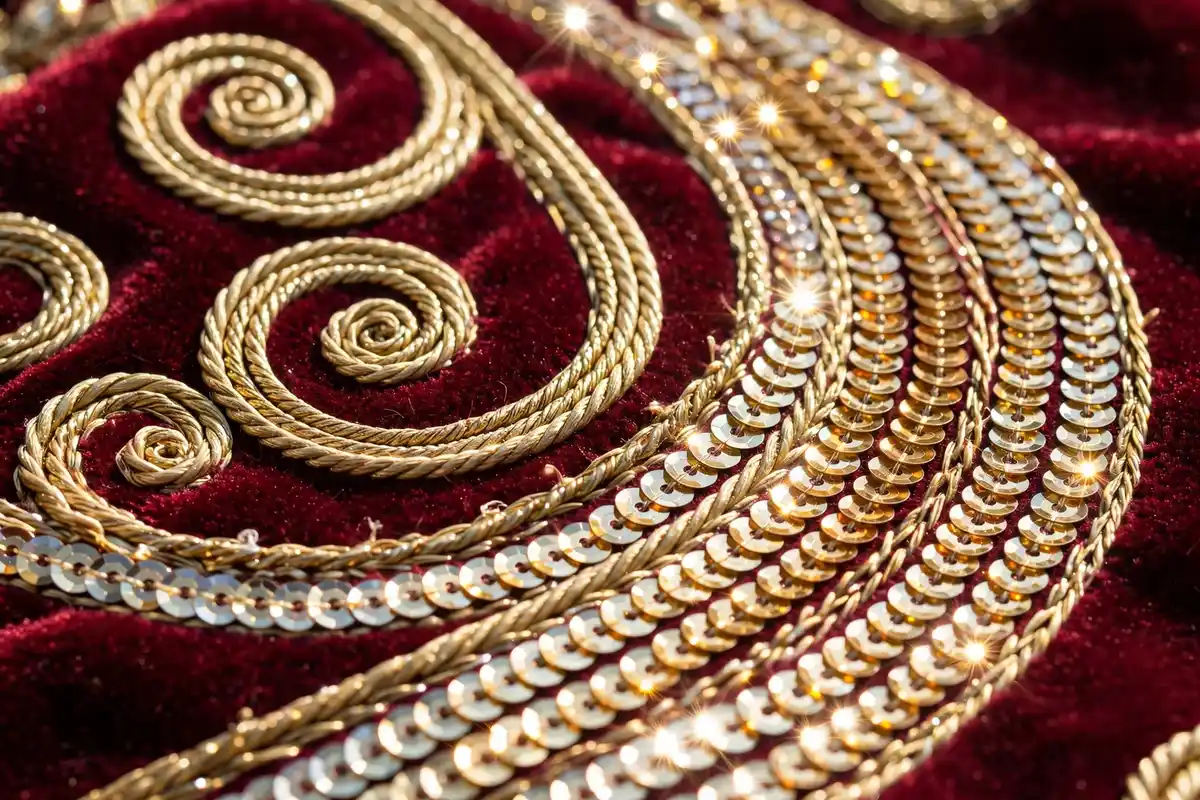
- Dori cording paths curved for your cord thickness, with planned tucked ends
- Ari chain-effect lines with even spacing for florals, vines and soft outlines
- Cutwork files with holding bars, correct stitch order and clear test-first marking
- Settings matched to your stated machine and attachments — no hardware assumed
- Free revisions until the file runs clean, in DST, PES, EXP, JEF, VP3, XXX, HUS, EMB, CND or PXF
What to tell us in the first message
Four facts make a specialty quote accurate: your machine and attachments, your sequin size or cord thickness, your fabric, and the finished design size. Add a photo or artwork that shows where the specialty work sits — edge, fill or outline — because the same flower digitizes three different ways under those three jobs. If you are mixing techniques, for example a couched outline with sequin centers, say so early; mixed files need one shared stitch order so the machine never sews a later layer across a finished sequin run.
Care, cost and honest guidance on specialty work
Specialty embroidery asks a bit more from everyone after the file is delivered, and a plain word about that helps you price and sell the garment well. Sequin lines should not be crushed in packing or pressed with a hot iron; couched cord needs its ends checked after the first wash; cutwork edges grow stronger, not weaker, when the sample wash test is done before the run. None of this is hard, but it belongs in your care label and your shop talk. A customer told how to treat a festive piece keeps it longer and blames the garment less.
Cost follows detail here more than size. A small gala packed with sequin fill, cord outline and ari detail can take longer to build and longer to sew than a large plain border. That is why the quote for this service always follows a look at the artwork and your setup notes, and why we will suggest dropping one technique when three compete in a small space. Two techniques done cleanly read as rich; four squeezed together read as noise. If sparkle is the goal, we can also grade the effect — full sequin on the gala, a single sequin line on the daman, plain thread motifs between — so the outfit shines in layers and the price stays in proportion.
Mixing specialty work with plain thread work
Most strong festive designs mix plain and specialty stitching on purpose. Plain thread areas rest the eye, carry the large shapes and keep the garment light and wearable; the sequin line, cord edge or cutwork panel then lands as the rich detail it is meant to be. When you send artwork, mark which areas you picture as specialty and which as plain thread, even with rough notes on the photo. We balance the two in one stitch order, so plain fills finish before sequins drop and cord paths never cross a finished cutwork edge.
How to order
Send your artwork and setup details on WhatsApp. We confirm the price before work starts — specialty designs start from $14 per design, with detail and technique count shaping the final quote. Standard delivery is 24 hours, rush is 4–8 hours on request, and studio hours are Mon–Sat, 9 AM–9 PM (PKT) with WhatsApp orders taken anytime. Full steps are on the How It Works page.