DST · PES · EXP · JEF · VP3 · XXX · HUS · EMBStudio: Mon–Sat, 9 AM – 9 PM (PKT) · WhatsApp orders anytime

Home › Services › Logo Digitizing

Logo Digitizing

Your logo, rebuilt by hand as a clean embroidery file that runs smooth on your machine — matched thread colors, density set for your garment, and delivery in 24 hours.

Quick answer: Logo digitizing redraws your logo as stitches, with each shape, letter and color planned for thread instead of ink. Best for: staff uniforms, polos, work shirts, jackets and branded goods where the logo must look the same every time. Price from: $13 for logos up to 4.5 inches; a cap version of an existing design is $5.50 — final quote confirmed before work starts.

Why a print logo is not a stitch file

A logo made for print or a screen can use hair-thin lines, soft fades and text as small as you like. Thread has real width, fabric moves under the needle, and every shape pulls a little as it sews. If you feed print art straight into auto software, the result is often a logo with clogged letters, gaps between colors and edges that wave instead of sitting straight.

Hand digitizing fixes that before you ever hoop a shirt. We redraw the logo shape by shape, deciding which parts become satin, which become flat fills, and which fine lines should become a single run stitch. Letters get a touch more space. Closed shapes like the inside of an “a” or an “o” get opened up so they stay open after sewing.

The goal is a logo that still reads as your logo at arm’s length and up close. Colors line up. Edges meet. Small text stays readable. And because the build is planned, the tenth shirt looks like the first one — which is the whole point of putting a logo on a uniform in the first place.
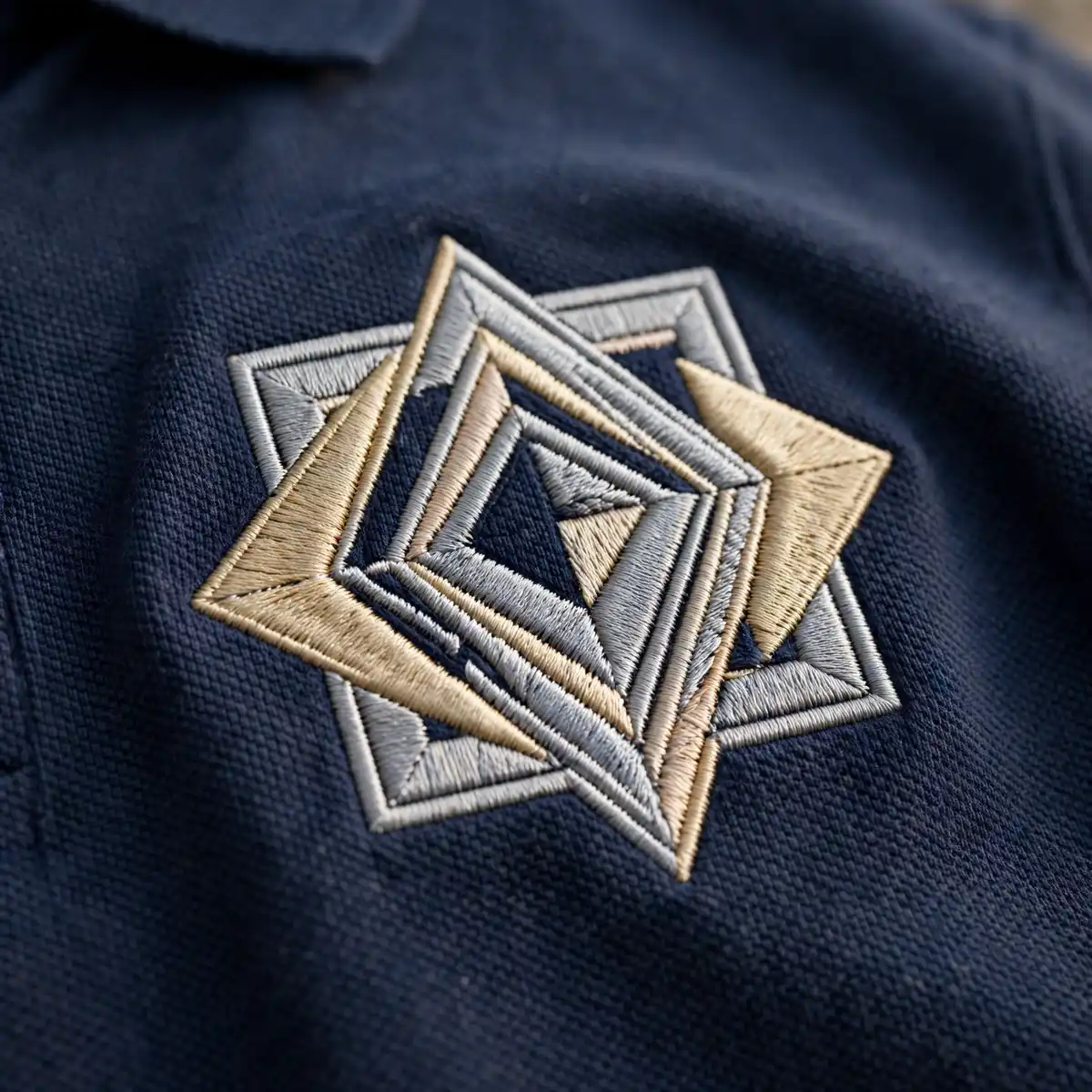
Embroidered logo sample showing clean satin edges and matched thread colors digitized from brand artwork
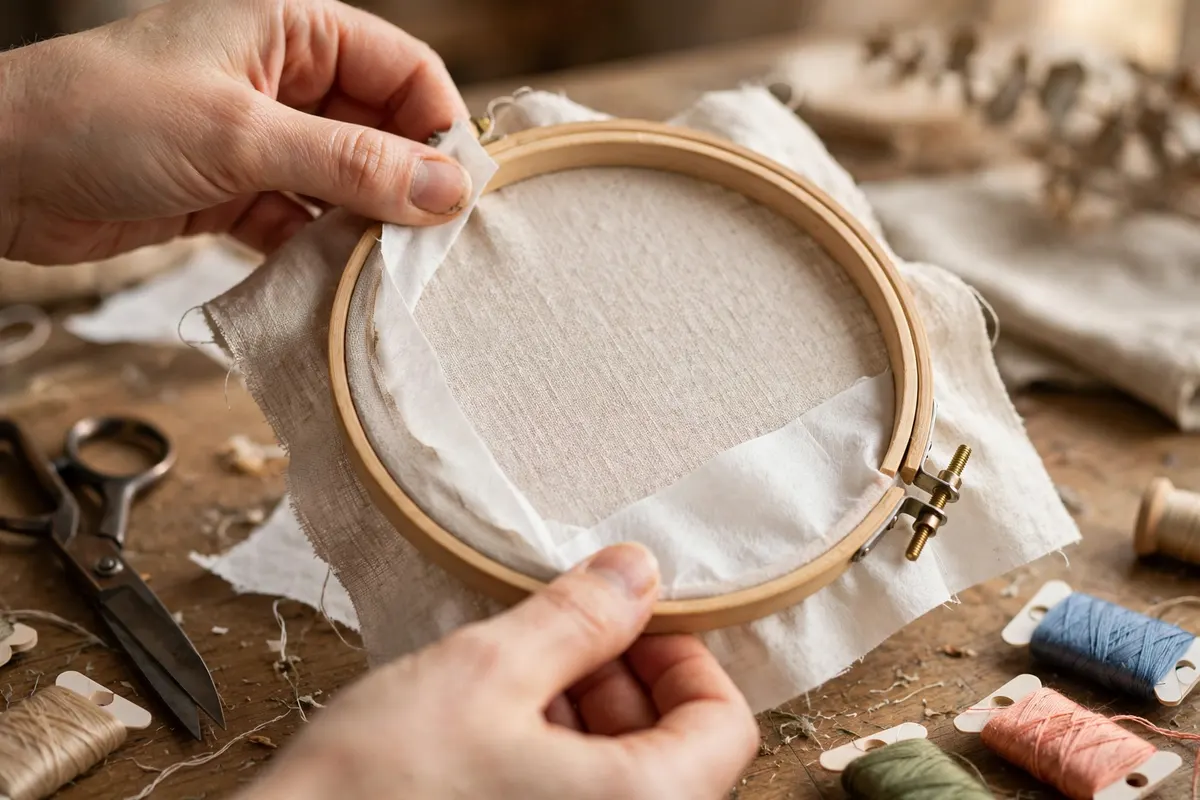
Fabric held firm in an embroidery hoop ready for a logo to be stitched at the correct placement

Hooping, placement and sew order

A good file still needs the garment held right, and our build assumes real hooping, not a perfect flat screen. We add underlay that anchors the design to the stabilizer early in the sew, so the fabric does not drift while later colors go down. That anchor step is a big reason hand-built files keep their registration when quick auto files lose it halfway through.

Sew order matters for logos with layered parts. Background shapes go first, then mid shapes, then outlines and text last, so fine detail sits on top where it stays crisp. We also path the design to sew nearby areas in one pass where we can, which cuts thread changes and keeps the back of the work neater.

Placement is part of the conversation too. Tell us if the logo goes on the left chest, a full front, a sleeve or a cap, and how wide it should finish. A chest logo and a full-front logo are different builds even when the art is the same: the larger one can hold fine detail, while the smaller one needs bolder shapes and simpler text. We will build for the placement you name, and flag it if one size will not serve both jobs.

If you are not sure about size, send the garment type and we will suggest a width that suits it. A test sew on scrap fabric in the same weight as your garment is always worth the few minutes it takes.

Thread colors, density and a logo that lasts

Color is where a stitched logo earns its keep. We match your brand colors to real thread shades and send the list in sew order, with codes you can reorder by. If you already stock a thread brand, tell us which one and we will match to that chart. If not, we will use a common chart and note the codes clearly.

Density is set for the garment, not left at a default. Workwear that gets washed hard needs a fill that covers well without turning stiff. A light fashion tee needs a softer hand. We balance cover, feel and run time: enough stitches to hide the fabric, not so many that the logo feels like a board or the needle labors through it.

Edges get the same care. Satin borders are kept within a safe width so they do not snag, loop or pull out in the wash. Very wide satin is split or swapped for a fill with a satin edge. Thin outlines that would vanish on a textured fabric are thickened a touch or moved to a bolder stitch, so the shape still reads after many washes.

We also think about the second run, not just the first. A logo file should give the same result next month on a new batch of shirts. Stable density, clear color order and a sensible stitch count make that repeat result much easier for whoever runs your machine.

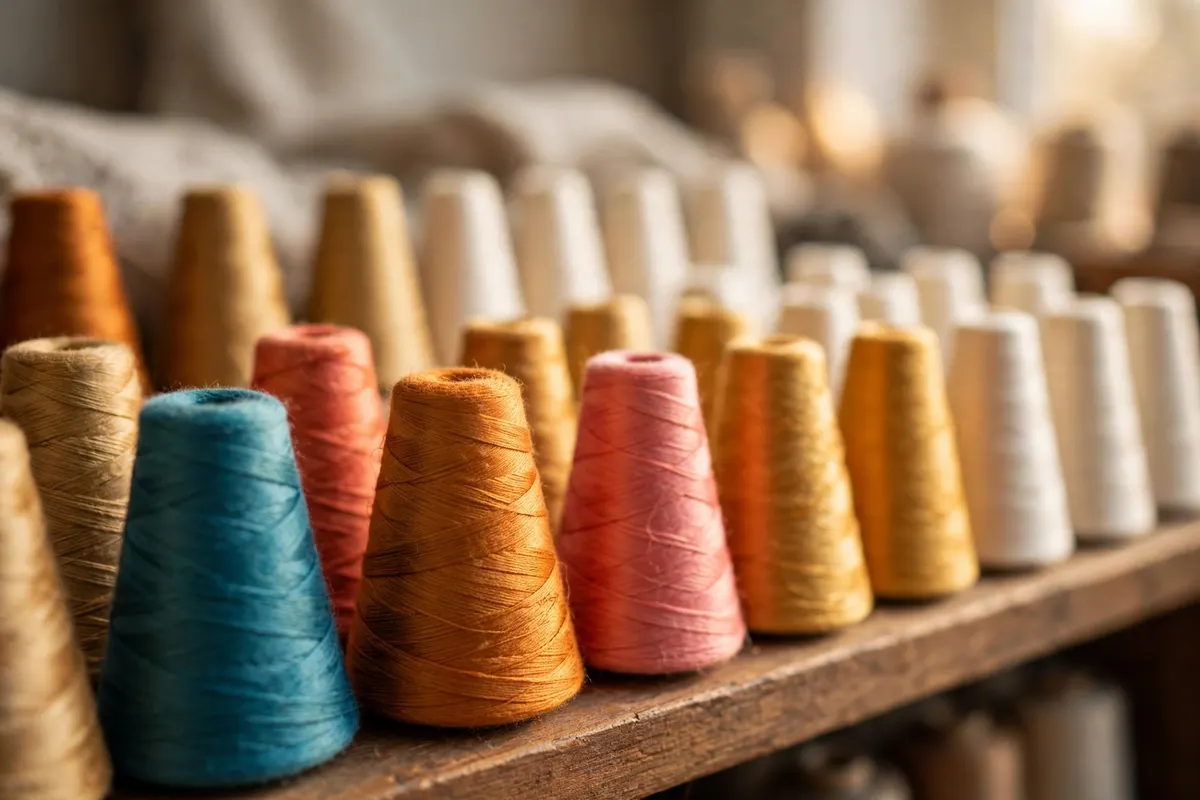
Spools of embroidery thread in many colors used to match brand logo colors for digitized designs

What you get with a logo order

You get a file built for one clear job: your logo, at your size, on your garment, on your machine. Along with the file we send a preview so you can check the layout and colors before you sew, plus the thread list in run order. Files come in DST, PES, EXP, JEF, VP3, XXX, HUS, EMB, CND or PXF — just name your machine.

If the test sew shows a problem — a letter closing up, a color gap, a pucker on your fabric — tell us what you see and, if you can, send a photo of the sew-out. Revisions are free until the file runs clean, and most fixes are small, targeted changes rather than a full rebuild.

Your file includes

  • Logo redrawn by hand for thread, not auto-traced
  • Brand thread colors matched and listed in sew order
  • Density and underlay set for your garment type
  • Letters spaced and opened so small text stays readable
  • Preview image to check before you sew
  • Your machine format, ready to load and run
  • Free revisions until the file runs clean

Logos up to 4.5 inches are $13, which covers most chest and uniform work. Medium logos up to 8 inches are $23. Need the same logo on caps as well? A cap version of an existing design is $5.50. Standard delivery is 24 hours, with rush in 4–8 hours on request.

How to order your logo file

Three short steps, all handled on WhatsApp.

1

Send the logo

Send your logo file or a clear image, the finished width, the garment type and your machine format. Add brand color codes if you have them.

2

Approve the plan

We confirm the price, the size and any small changes needed for thread. If a gradient or tiny text needs a tweak, we explain it before we start.

3

Run your test sew

Your file arrives within 24 hours. Sew one test piece, check the letters and edges, and ask for a free revision if anything needs a fix.

Read the full How It Works guide

Common logo problems we fix at the build stage

Most logo sew-out problems are born in the file, not on the machine. Catching them early saves garments.

The first is text that fills in. On screen, a bold font looks strong; in thread, the inside spaces of letters shrink as stitches pull in. We add pull compensation and spacing built for the sew size, and for very small lines we may suggest a cleaner, simpler font weight that keeps the same feel. The second is outlines that miss their fill. That gap comes from fabric shift and thread pull, so we overlap shapes slightly on purpose — enough to close the gap, not enough to show a ridge.

The third is a logo that puckers the shirt. That is usually density and underlay, not your hooping. A lighter build with the right stabilizer advice often solves it without touching the art. The fourth is detail that was never going to sew: a one-pixel line in the art is far thinner than any stitch. We will point to those spots in your preview and offer a bolder version of the same element.

None of this changes what your logo is. It changes how the logo is built, so the stitched version matches the one your customers already know — on a polo, a jacket or a cap, run after run.

Related services

Placement-specific builds that pair well with a main logo file.

Logo digitizing questions

How small can my logo be digitized?

Most logos sew well down to about two inches wide, as long as the detail is bold enough. Fine lines, tiny text and thin gaps are the first things to close up at small sizes. Send us your logo and the smallest size you plan to use. We will check each element and tell you what will stay sharp and what should be simplified for that size.

Do you match my brand thread colors?

Yes. Give us your brand color codes or a clear image of the logo, and we will match them to the closest real thread colors and list them in sew order with your file. Thread is not ink, so an exact screen match is not always possible, but we pick the nearest shade and note the code so every run of the logo looks the same.

What file should I send for a logo?

A vector file such as AI, EPS, SVG or PDF gives the cleanest result, because the edges stay sharp at any size. A large, clear PNG or JPG also works well. If all you have is a photo of the logo on a shirt or a sign, send that too. We will redraw what we need and show you the clean artwork before we digitize it.

Can one logo file work on shirts and caps?

A flat shirt file and a cap file are built in different ways. Caps curve away from the needle and have a center seam, so cap files sew from the center out with extra support. Your shirt file will not sit right on a cap. The good news is a cap version of an existing design costs only $5.50, built from the same artwork.

What if my logo has a gradient?

Thread cannot fade the way ink or a screen does, so a gradient has to be rebuilt in a thread-friendly way. We can blend two thread colors with layered stitches, or convert the fade into two or three clean color steps. Both can look sharp when planned well. Send the logo and we will show you which approach suits your design and your garment best.

Send your logo, get a file that sews right

Message your logo on WhatsApp for a free quote. We will check the size and detail, confirm the $13 price for logos up to 4.5 inches, and deliver in 24 hours.