DST · PES · EXP · JEF · VP3 · XXX · HUS · EMBStudio: Mon–Sat, 9 AM – 9 PM (PKT) · WhatsApp orders anytime

Home › Services › Patch Digitizing

Patch Digitizing

Crisp patch files with clean merrow or satin borders, sharp detail at small sizes, and a stitch plan that matches how your patch will be finished and worn.

Quick answer: Patch digitizing turns your artwork into a stitch file built to be made as a standalone patch, with the border, backing fabric, and finishing method planned from the start. Best for: uniform patches, club and team patches, name patches, and logo patches for jackets, bags, and caps. Price: digitizing from $13, with final quote confirmed before work starts.

Why patches need their own digitizing

A patch is not just a logo stitched on a different fabric. A design digitized for a shirt assumes the shirt holds it, stretches with it, and hides its back. A patch has to stand on its own. It gets stitched on a backing fabric, cut out, edged, handled, and only then attached to a jacket, bag, or uniform. Every one of those steps puts stress on the stitching that a normal garment file never planned for.

That is why patch digitizing starts with the finished patch, not with the logo alone. We think about the backing first: twill and felt behave in different ways, and the underlay and density have to suit the one you will use. We think about the cut line next, because the border must sit at a steady distance from the design and leave the right amount of edge for cutting or merrowing. And we think about wear. A patch edge gets rubbed, snagged, and washed more than flat work on a garment, so the border needs enough hold to stay tight instead of looping or fraying at the edge.

When a patch file ignores those points, the failures are easy to spot: borders that wave in and out, corners that lift, detail that shifts because the backing was too soft for the density, and edges that look tired after a few washes. A file built as a patch from the first stitch avoids most of that. Send us your artwork, your finished size, and how the patch will be attached, and we build for that exact job.
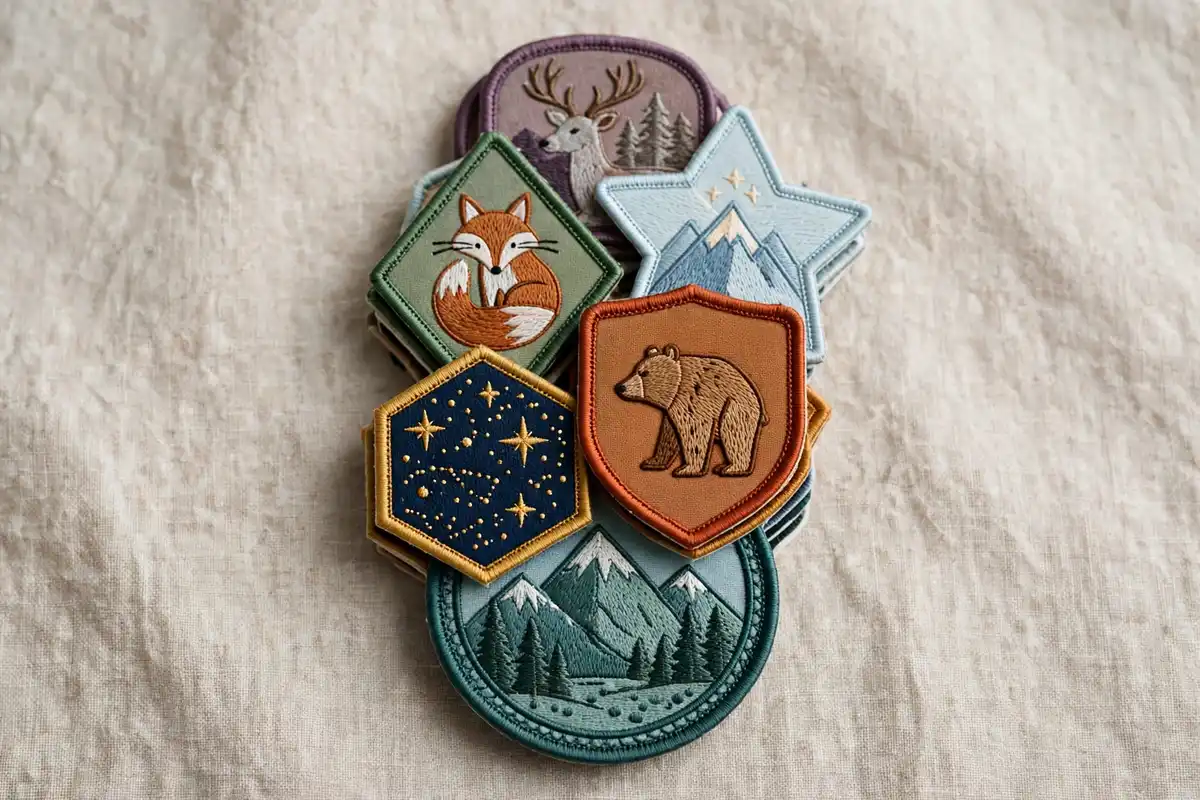
Embroidery patch digitizing sample with a clean finished border and sharp inner detail
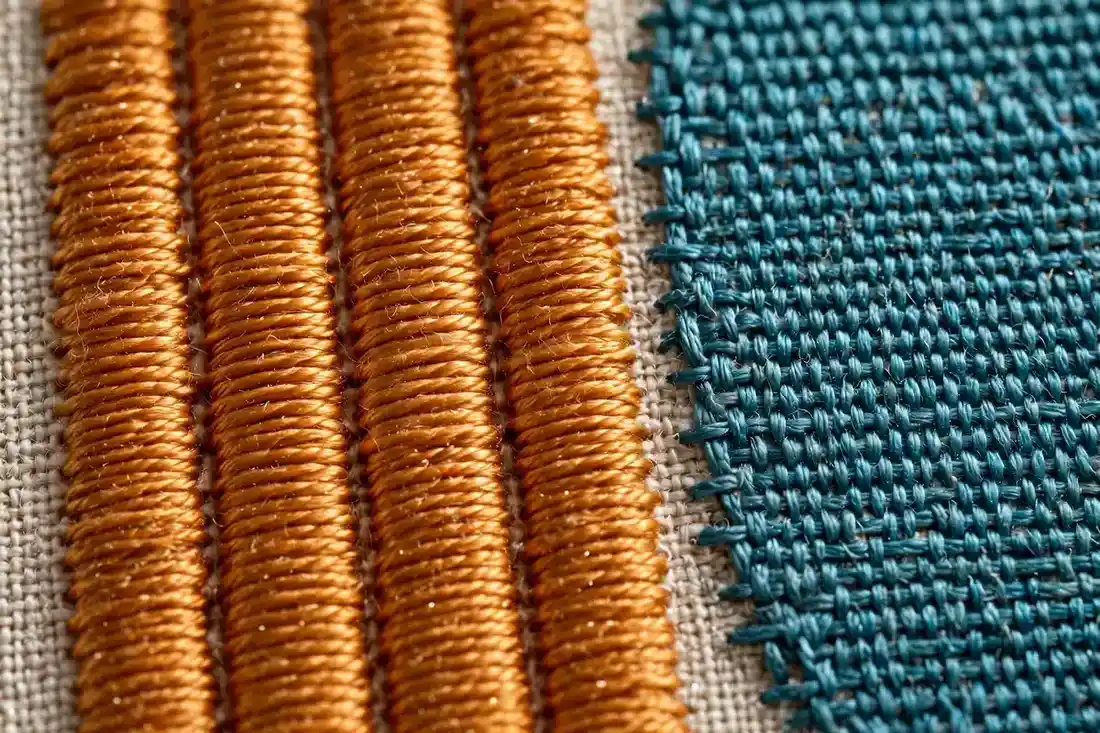
Close-up stitch texture showing the density that keeps patch edges and fine details crisp

Borders: satin, merrow, and stitched edges

The border is the frame of the patch. It holds the design in, covers the cut edge of the backing, and gives the patch its finished look. There are three common ways to get there, and they are not interchangeable in the file.

A satin border is stitched in the embroidery file itself. We digitize a dense satin edge that wraps the outline of the patch, so once you cut close to the stitching, the patch is nearly done. Satin suits most shapes, including custom outlines, and it is the most flexible choice if you finish patches in-house on a standard machine. Its width and density need care: too narrow and the cut edge peeks out, too heavy and the patch curls.

A merrow border is different. That wrapped, overlocked edge is made on a merrow machine after the embroidery is stitched, not inside the embroidery file. Our job for a merrow patch is to leave the correct plain allowance outside the design, keep all stitching clear of the merrow path, and shape the outline so the merrow machine can follow it cleanly. Merrow works best on regular shapes like circles, ovals, rectangles, and shields. Sharp inner corners and wild custom outlines can jam or strain the merrow finish, so we will flag that before you order if your shape is a poor fit.

A simple stitched edge — a running or blanket-style line near the cut — suits casual and craft patches where a soft, handmade edge is the goal. Whatever you choose, tell us at the quote stage. Changing border type after digitizing means rebuilding the edge plan, so getting it right first saves you time and a second fee discussion later.

Keeping small detail sharp

Patches are often small, but the artwork people send for them often is not simple. Names, mottoes, small icons, and layered scenes all have to survive at 2, 3, or 4 inches wide. Good patch digitizing keeps that detail readable by making clear choices instead of shrinking everything and hoping for the best.

Text gets checked letter by letter. Letters need enough height and gap to stay open once thread sits on the backing. If a line of text is too small at your target size, we will say so and offer the honest fixes: a slightly larger patch, a bolder letter style, or moving the smallest line to a second patch. Fine lines get the same check. A line that is too thin breaks into dashes when it stitches, so we thicken where the art allows or rebuild the line as a clean satin column.

Layer order matters too. On a small patch, stitching light detail over a dense fill without the right underlay lets the fill push through and muddy the detail. We plan the stitch order and density so each layer sits clean on the one below it. We also keep total density in check. A small patch packed too dense turns stiff, puckers its backing, and can curl at the edges — the opposite of the flat, firm patch you want to sew or press onto a garment.

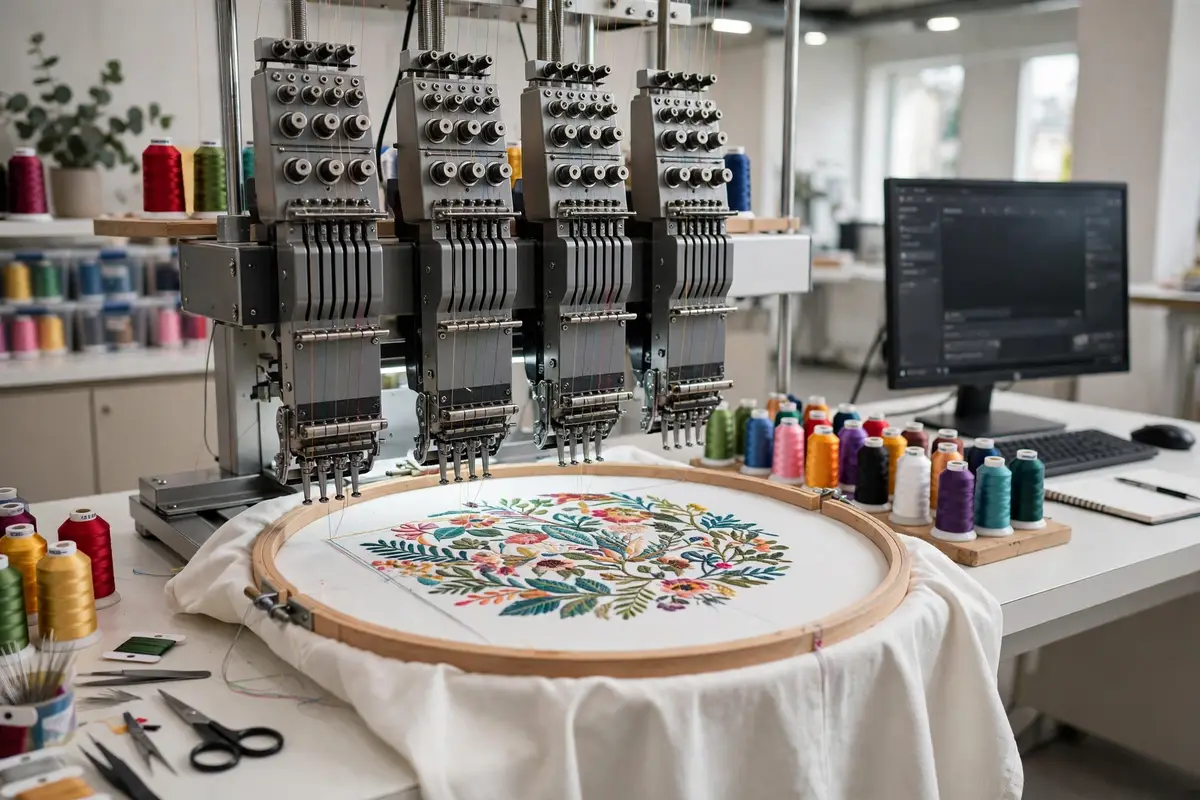
Custom embroidery digitizing sample showing detailed stitch work at a small patch-like size

Backing, attachment, and repeat orders

Tell us how your patch will live once it is made. A sew-on patch needs an edge that a needle can pass near or through without tearing up the border. An iron-on patch needs to finish flat and stable so heat and pressure bond it evenly, with no curled corner lifting later. A hook-and-loop backed patch, common for uniforms and gear, needs a firm, flat back so the backing material bonds well. We cannot supply or fit your backing materials — that happens in your finishing — but we can and do plan the stitch side so it never works against the backing you chose.

The base fabric you stitch on matters at the quote stage too. Firm twill is the most common patch ground and handles detail and borders well. Felt gives a softer, classic feel and pairs with chenille-style patches, but it needs gentler density so the edge does not cut or distort. If you stitch on the garment first and cut later, or stitch full sheets of patches in one hoop, tell us. Sheet layouts change spacing, jump stitches, and cut planning, and a file built for your real layout saves real time across a batch.

Repeat orders are where good patch files pay off. Once your file runs clean, the same design can be stitched again at the same size with the same result, batch after batch. If you later need the same patch larger, smaller, or with a name swapped in, tell us it is a version of an existing job. Small versions still need a detail check — a patch that reads well at 4 inches may need bolder text at 2.5 inches — but starting from a proven file is faster and more consistent than starting over.

What you get

Every patch order is digitized by hand for your artwork, size, border, and finishing method:

  • Border planned as satin, merrow-ready, or stitched edge
  • Density and underlay set for twill, felt, or your backing fabric
  • Small text and fine lines checked at your true finished size
  • Cut allowance and edge distance kept even around the design
  • Your file in DST, PES, EXP, JEF, VP3, XXX, HUS, EMB, CND, or PXF
  • Standard delivery in 24 hours, rush in 4–8 hours on request
  • Free revisions until the file runs clean on your machine

Pricing follows our standard rates: $13 for designs up to 4.5 inches, $23 up to 8 inches, with your final quote confirmed before work starts.

How to order

Three facts help us quote fast: the artwork, the finished size, and the border and backing plan.

1

Send artwork and size

Message us on WhatsApp with your art or a clear patch photo, plus the finished width or height you need.

2

Pick border and backing

Tell us satin or merrow, and sew-on or iron-on. Not sure? We will suggest the fit for your shape.

3

Stitch a test patch

Run one patch first and check the edge and detail. Revisions are free until the file runs clean.

Full steps are on How It Works. See pricing for size rates.

Related services

Patch orders often connect with these services for the same uniform, jacket, or product line.

Patch digitizing FAQs

What border styles can you digitize?

We digitize satin borders, merrow-style wrapped borders, and simple stitched edge borders. A satin border is stitched as part of the embroidery file itself. A true merrow border is finished on a separate merrow machine after stitching, so we leave the right edge allowance for it. Tell us which finish you want, and we will build the border plan to match it.

Can you digitize a patch with tiny details?

Yes, within honest limits. Small text and fine lines can stay sharp on a patch if the patch is big enough for them. At very small sizes, tiny letters fill in and thin lines break up, no matter who digitizes them. Send your artwork and finished size, and we will tell you what will hold, what needs to grow, and what should be simplified.

What sizes work for patches?

Most patches fall between about 2 and 5 inches wide, but the right size depends on your detail. A simple bold shape can go smaller. A patch with text, faces, or layered detail needs more room to stay readable. Shape matters too: round, shield, rectangle, and custom die-cut outlines all work. Give us your target size and we will check the detail against it.

Do you plan for iron-on or sew-on backing?

Yes. Tell us how the patch will be attached and we will plan the stitching and border for that finish. Sew-on patches need a border that takes needle work without damage. Iron-on patches need a flat, stable back and an edge that stays clean under heat and pressure. The backing itself is added in your finishing step, but the digitizing should never fight it.

Can you copy a patch from a photo?

Yes, a clear photo is a good starting point. Send a straight-on photo with something for scale, like a ruler or coin, and tell us the finished size you want. We redraw the design from the photo and digitize it fresh. Blurry, angled, or partly covered photos can hide detail, so we will ask for a better shot if part of the patch cannot be read.

Ready to make patches that finish clean?

Send your artwork and finished size on WhatsApp for a free quote. Standard delivery is 24 hours, with rush in 4–8 hours on request.

Order Patch Digitizing on WhatsApp