Where borders go — and how fabric changes the plan
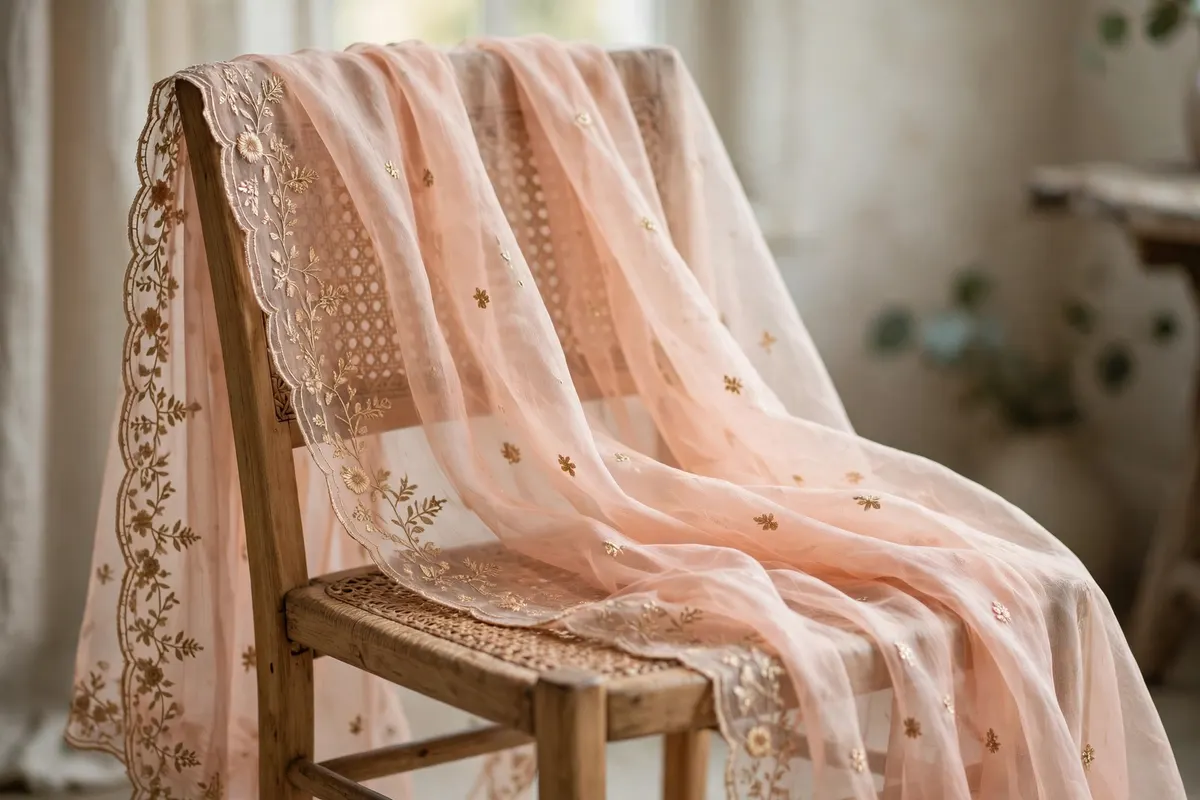
Hem borders are the largest use, but the same repeat craft serves cuffs, trouser hems, front placket bands, dupatta four-side borders and scarf ends. A dupatta border set is planned as a system: two long sides, two ends and four corners that turn the pattern without breaking it. If your dupatta carries a heavy pallu end — the decorated end panel — we build that as its own piece matched to the border scale.
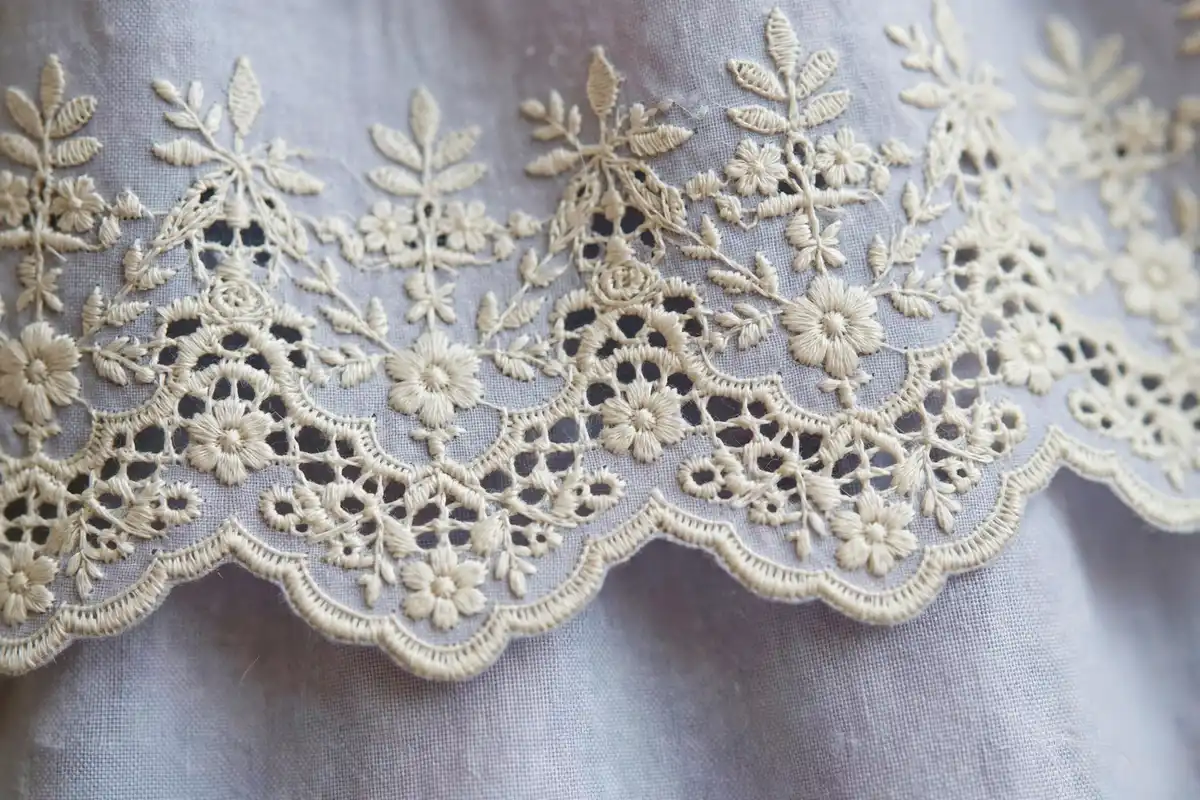
Fabric weight sets density throughout. A deep festive border on silk or cotton can carry layered fills and metallic accents. The same width on lawn needs a lighter hand or the hem will curl and the shirt will hang badly — a stiff border on a soft body twists the whole garment. On chiffon dupattas, borders stay open and light almost by rule. Send your fabric name with the measurements. If the border will be sewn on one fabric and worn over another, as dupattas are, tell us both.
Hoop size shapes the file too. Long borders run in sections, and we place section joins at repeat points with small alignment marks your operator can line up by eye. Tell us your largest hoop and we will split the runs to suit it, rather than sending one long file your machine cannot load.
What you get
- Border files built to your exact total length and width, with repeats that divide evenly and joins hidden inside the pattern
- Scalloped daman edges counted to finish whole at the side slits, with satin edges that hold after trimming
- Planned corners, slit ends and dupatta four-side sets — no stretched repeats
- Cutwork-style lace with holding stitches and bars, clearly marked for test-first sewing
- Runs split for your hoop size with alignment marks at each section join
- Free revisions until the file runs clean, in DST, PES, EXP, JEF, VP3, XXX, HUS, EMB, CND or PXF
Measurements that save a revision round
Three numbers make or break a border order: finished width, total length per run, and the length of any slit or opening the border must stop at. Measure the hem flat, after the pattern is final, not from an older size. If front and back hems differ, send both. Add a photo of the artwork next to a ruler if scale is unclear. With those in hand, most border files sample clean on the first run.
Borders that work across a whole collection
One well-built border rarely serves one outfit. Labels reuse a proven daman border across a whole season — on the shirt hem, narrowed for the trouser, lightened for the dupatta — and that reuse is smart business, as long as each width is rebuilt and not just squeezed. A border squeezed from six inches to two keeps its shapes but loses its air; the flowers crowd and the lace holes close. When you order, tell us every width you plan to use. We draw the family from one master pattern, opening the small widths up and enriching the wide ones, so each version looks made for its job.
Keep notes with your border files: total length per size, hoop split points, and the stabilizer that worked on your sample. Borders run long, and small setup facts decide whether piece fifty looks like piece one. If your operator changes, those notes carry the craft across. We name every file with its width and length for the same reason. A border library you can trust — measured, named and sampled — turns next season's development from weeks of trial into days of sewing, and it starts with the first order being measured right.
Testing a long border before the run
Test borders at length, not as a single repeat. Sew at least three repeats plus one section join on the real fabric, then lay the strip flat and sight along it. Waves, creeping length and a join that steps sideways all show at three repeats while staying hidden at one. Check the total sewn length against your pattern length too; stitch pull can shrink a long run by a small percent that matters at the slit. If the run measures short or long, tell us the sewn measurement and we adjust the file in the free revision round before your batch is cut.
How to order
Send your artwork or photo on WhatsApp with the border width, total lengths, fabric and hoop size. We confirm the price before work starts — borders and lace start from $14 per design. Standard delivery is 24 hours and rush is 4–8 hours on request. See How It Works for the full order steps.