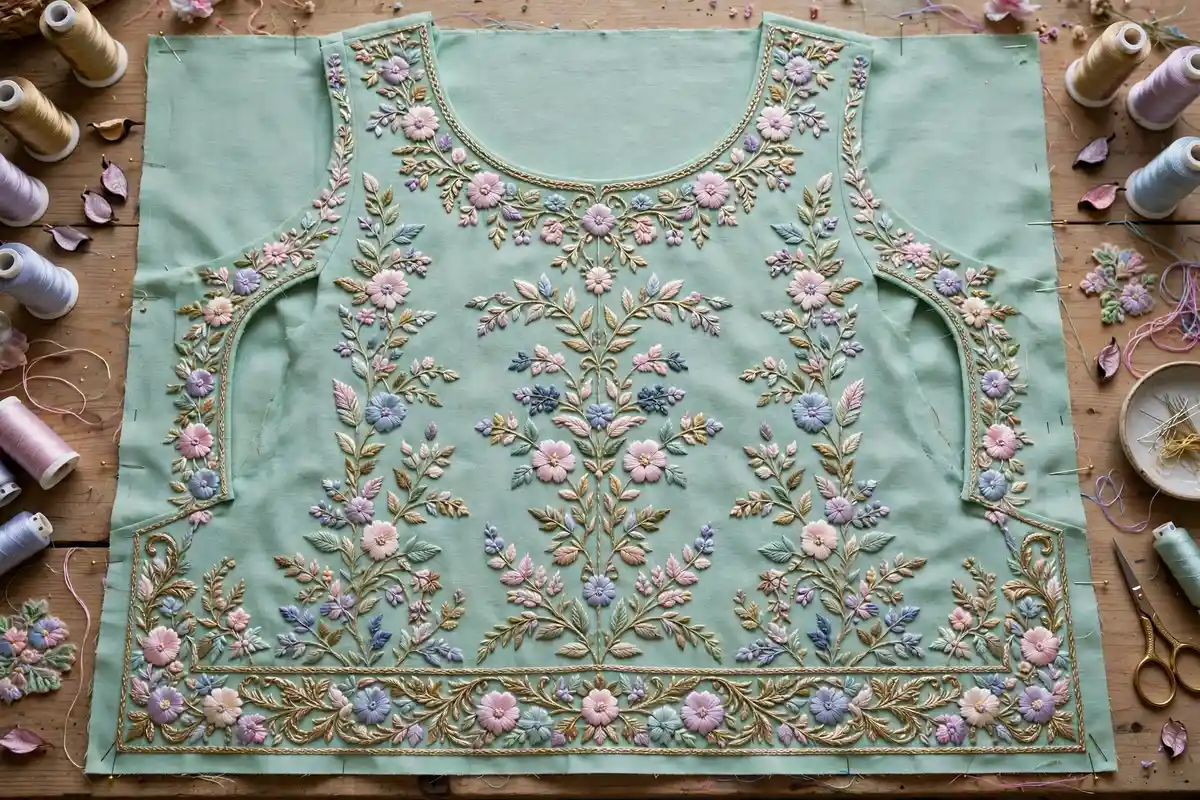
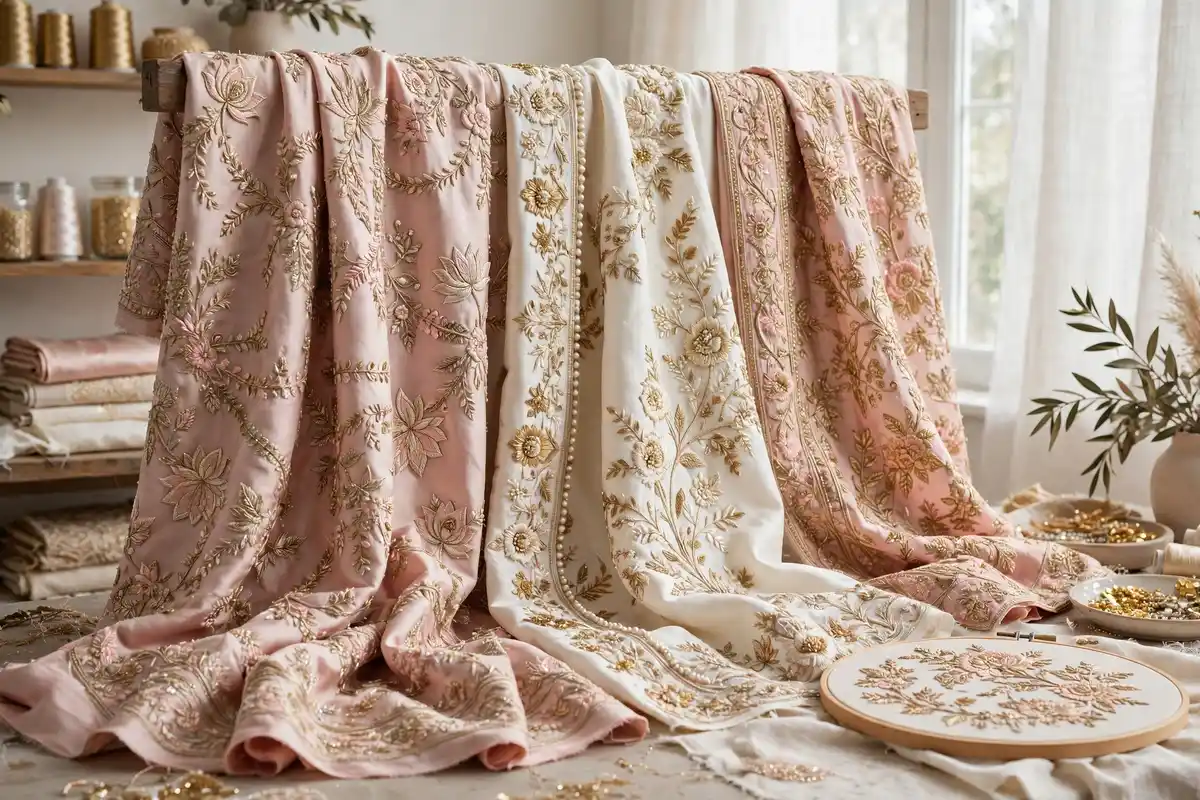
Fabric decides the stitch plan
Lawn is the daily fabric of this wing. It is light, smooth and honest — it shows puckering at once, so lawn files get careful underlay, modest density and stitch directions that spread pull across the panel instead of gathering it in one line. A dense logo-style fill that works on a jacket will wrinkle a lawn front. Our lawn settings keep the hand of the cloth soft, which is what your customer feels when she picks the outfit up.
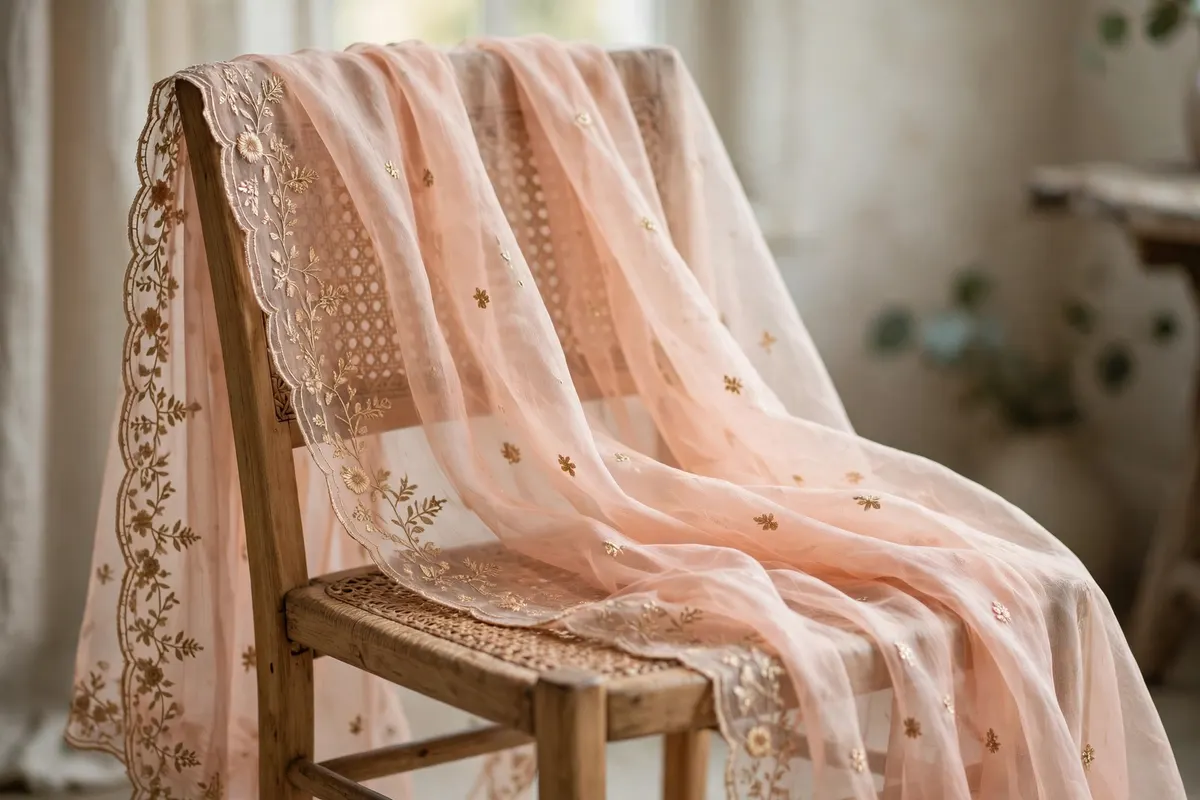
Chiffon and silk need a gentler hand again. Both shift under the needle and mark easily, so we lower density further, lean on running-stitch detail and open fills, and keep heavy satin only for short edges where it can hold. We will tell you honestly if a design drawn for lawn needs to lose some fine detail to sew well on chiffon. A slightly simpler design that sews clean beats a detailed file that tears the cloth on the third piece.
Firmer fabrics — cotton, cambric, khaddar and blended suitings — carry the most detail. They hold dense fills, small bootas and tight border work without complaint, and they suit the heavier festive sets. Whatever your fabric, send a note of its name and, if you know it, its weight. If you are unsure, a photo of the fabric next to your artwork helps us judge it well enough for a first sample, and the free revision round covers any fine tuning after your test stitch-out.
What you get
- Front, back, sleeve, neckline, border and dupatta files planned together with one shared scale and thread list
- Each part sized to your pattern measurements and named clearly by part and size
- Border repeats stepped to your exact hem length with planned corners and slit ends
- Density and underlay set for lawn, chiffon, silk or your stated fabric
- All machine formats available — DST, PES, EXP, JEF, VP3, XXX, HUS, EMB, CND and PXF
- Free revisions until the set runs clean, plus standard 24-hour delivery and 4–8 hour rush on request
Sizes, repeats and honest limits
Scaling deserves a plain word. Making a file ten percent larger on a screen is easy; making it sew well at the new size is hand work. Motifs grow gaps, satin edges get too wide, and density drifts. When you order a size range, we rebuild each size from the shared artwork instead of stretching one file. Tell us which measurements change between sizes — chest width, front length, sleeve length, hem width — and we handle the rest.
There are also limits worth knowing before you sample. Very fine lines under about one millimeter do not hold in thread on light fabric. Tiny bootas crowded close together merge into a blob at sewing size. Long floating satin stitches snag on wear. If your artwork has any of these, we will flag it in the quote stage and suggest the smallest change that keeps the look. You approve any change before we digitize, so the sampled outfit is never a surprise.
Sampling, colors and repeat orders
Sample first, always. Stitch one front on the real fabric, wash it the way the customer will wash it, and look at it in daylight as well as shop light. Thread shades shift between the two, and a color that sings under a tube light can look flat at noon. We keep your thread list with the order, so a repeat run three months later uses the same shades in the same order. If you change a colorway — the same design in new colors for a new season — send the new shade numbers and we will map them onto the same files. The stitch plan stays proven; only the palette changes.
Repeat orders are where a matched set pays you back. Because every part was planned together once, reordering a bestseller in a fresh color or an added size does not start from zero. Tell us what changed and what stayed the same, and we adjust only the changed parts. Boutiques building a signature look across seasons use this often: one strong gala and daman language, refreshed in new fabrics and shades, so customers learn to spot the label before they read the tag. A clear file set, kept in order, becomes stock your business owns — as real as the fabric on your shelf.
How to order
Send your artwork or reference photos on WhatsApp with your fabric, your pattern measurements and the sizes you need. We confirm the full set price before work starts — sets start from $14 per design, and the quote reflects the number of parts and the detail level. Approve the quote, receive the files in 24 hours, stitch your sample, and use the free revision round for any placement or density tweak. Full details are on the How It Works page.