DST · PES · EXP · JEF · VP3 · XXX · HUS · EMBStudio: Mon–Sat, 9 AM – 9 PM (PKT) · WhatsApp orders anytime

Home › Services › Appliqué Digitizing

Appliqué Digitizing

Large shapes become fabric instead of dense fill, so your design stitches faster, feels softer, and uses far less thread — with placement, tack-down, and clean satin edges planned into every file.

Quick answer: Appliqué digitizing builds your design around pieces of fabric held down by stitching. The file gives you a placement line, a tack-down stitch, and a finished edge, so you lay your own fabric and get a soft, low-bulk result. Best for: large letters, simple logos, kids wear, team gear, and jacket backs. Price: standard digitizing from $13, appliqué add-on +$4.50. Final quote confirmed before work starts.

What appliqué digitizing actually does

Regular embroidery fills every part of a design with thread. Appliqué takes a different path. The big, flat areas of the design become pieces of real fabric that you lay on the garment. Stitching only holds those pieces down and finishes their edges. The result looks bold and clean, but the garment stays light and soft to wear.

That sounds simple, but the file has to be built in the right order. First the machine stitches a placement line on the base garment. That line shows you the exact spot and shape for your fabric piece. Next comes the tack-down stitch, a light running stitch just inside the edge that pins the fabric in place. You then trim the extra fabric close to that line. Last, the machine covers the raw edge with a satin stitch, a zigzag, or a blanket stitch, so the edge looks neat and does not fray.

Each of those steps needs care in the digitizing. The placement line must match the artwork exactly. The tack-down must sit far enough inside the edge that your trim stays clean, but not so far in that the fabric lifts. The final edge must be wide enough to cover small trimming differences, without looking heavy. When any one step is off, you see it right away: fabric peeks out, edges ripple, or the satin border misses the fabric on one side. Our job is to plan all three steps together, for your size and your fabric, before you ever hoop a garment.
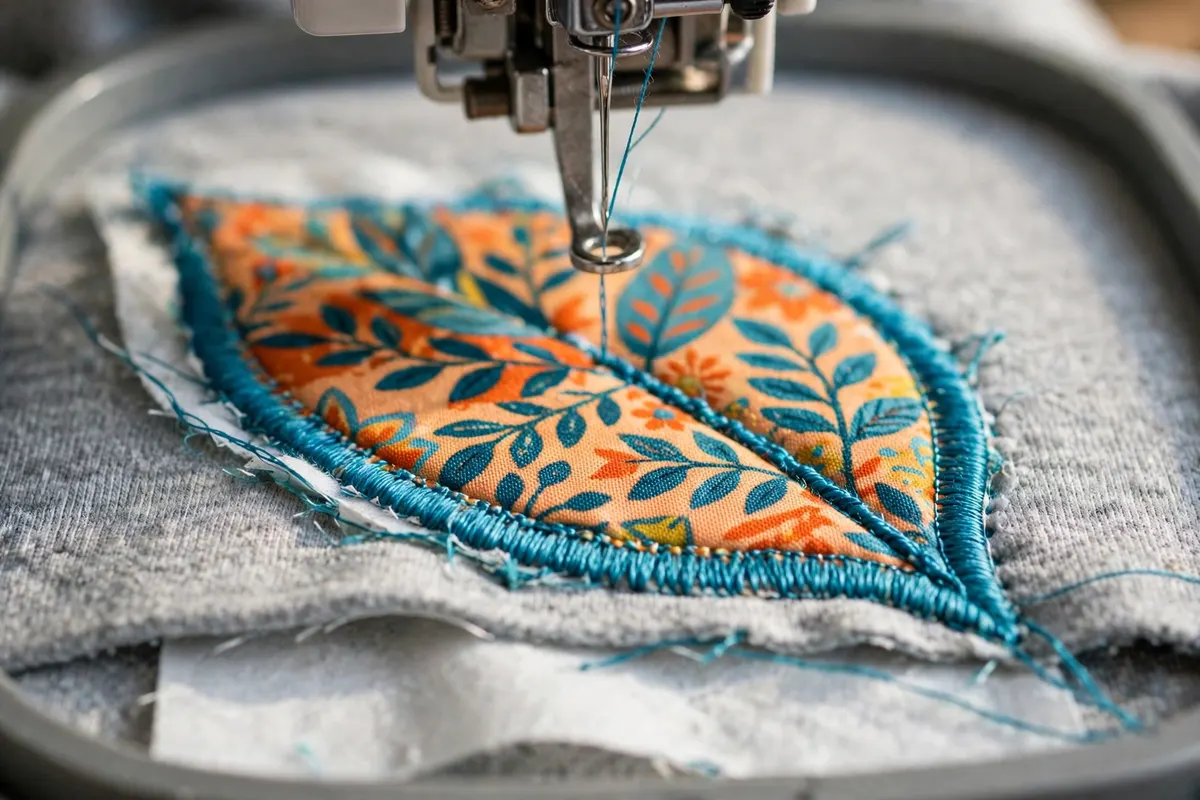
Appliqué digitizing sample showing fabric shapes finished with clean satin stitch edges
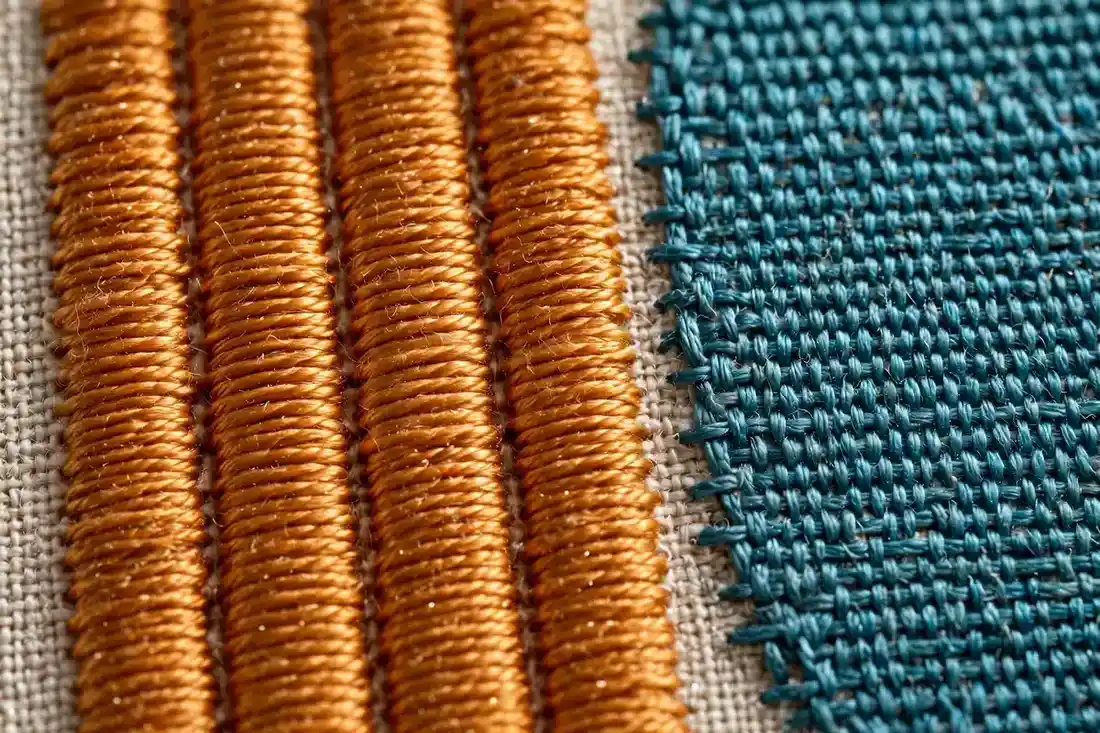
Macro view of the neat satin stitch edges that finish an appliqué shape

When appliqué is the right call

Appliqué shines when a design is large and mostly flat color. A full jacket back filled with thread can feel stiff, take a long time to stitch, and use a lot of thread. The same design with fabric areas feels like part of the jacket. It also opens up choices thread cannot give you: a printed fabric, a plaid, a camo pattern, or a fabric that matches something else the wearer owns.

Large letters are the classic case. Team names, school initials, and Greek letters look sharp as fabric with a satin edge, and they stay comfortable on hoodies and sweatshirts. Kids designs suit appliqué too, because soft fabric shapes feel better against skin than a solid block of stitching, and parents can pick fun prints for each shape. Simple logos with one or two bold shapes also work well, especially when the same logo runs again and again and stitch time adds up.

Appliqué is not the best fit for every design. Fine detail, tiny text, soft shading, and photo-style art need thread, not cut fabric. Very small designs leave little room to place and trim fabric by hand. If your artwork sits on that line, send it to us first. We will tell you plainly which parts work as appliqué, which parts should stay as stitching, and whether a small art change would make the whole design run better. That honest check costs nothing and saves a wasted stitch-out.

How we plan placement, tack-down, and edges

Good appliqué starts before any stitch is placed. We look at your artwork and break it into layers: which shapes sit on the bottom, which shapes overlap, and which details go on top as thread. Overlaps matter. If two fabric pieces meet, the file must stitch them in an order that keeps every edge covered and every layer flat.

Next we set the working sizes. The placement line follows the true shape. The tack-down line sits a small step inside it, so you have a clear guide for trimming. The final edge is set wide enough to cover the fabric edge and your trim line, with density that holds on your base fabric without pulling it in. On soft or stretchy garments, we add the right underlay and pull compensation so the finished shape keeps its size instead of shrinking or puckering as it stitches.

We also plan the stops. The file pauses after the placement stitch and again after tack-down, so you can lay fabric, trim it, and check the piece before the edge runs. If your machine handles color changes as stops, we set the sequence so those pauses land in the right places. Tell us your machine model and hoop size when you order, and we will set the file up for the way you actually work, not for a generic setup.

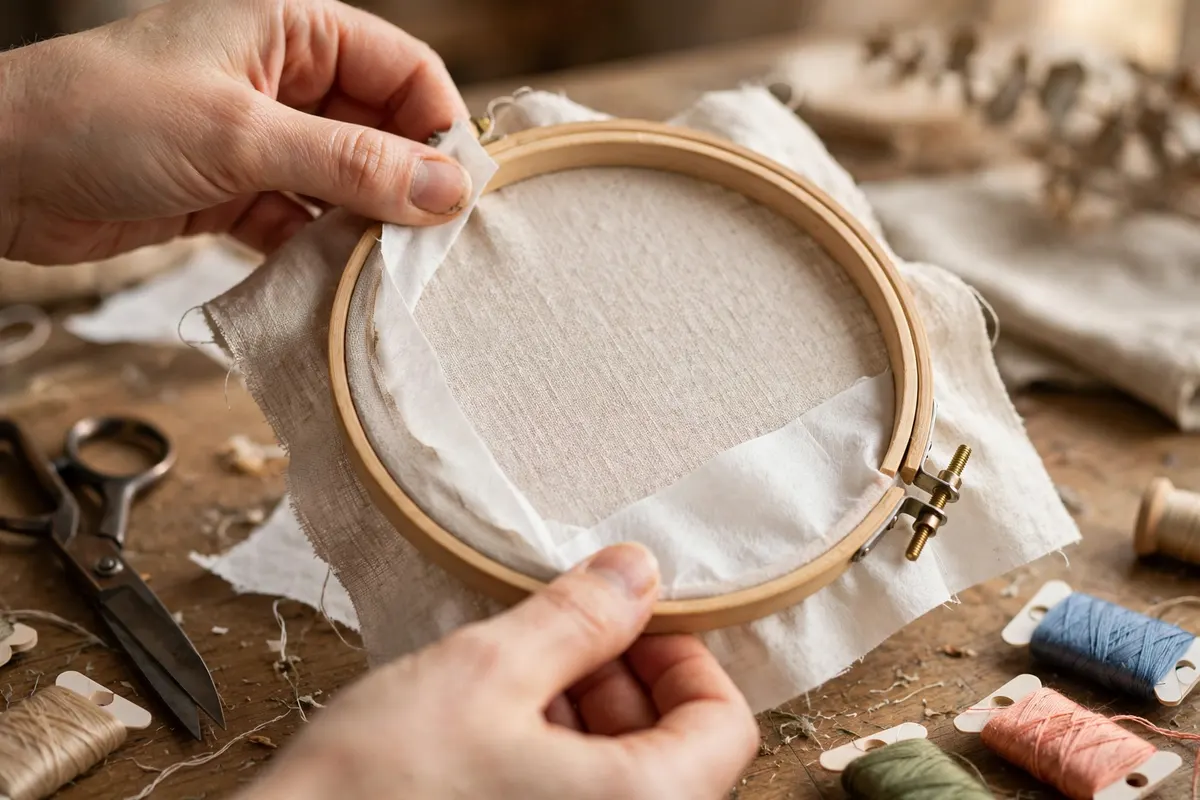
Fabric hooped flat and ready for appliqué placement and tack-down stitching

Fabrics, sizes, and edge finishes

Your fabric choice shapes the whole job. Stable woven fabrics such as cotton, twill, and canvas cut clean, sit flat, and trim neatly, which makes them the easiest place to start. Felt is also a strong choice because its edge does not fray, so it forgives small trimming slips. Knit and stretch fabrics can work, but they need a stable backing and a gentler tack-down so they do not stretch out of shape while you handle them. Very thick fabrics, such as heavy denim layers, need a wider final edge and a slower, stronger stitch plan. If you are not sure about a fabric you own, name it in your message and we will advise you before you order, not after a failed run.

Size matters just as much. As a plain guide, shapes need enough room for you to lay, trim, and cover them by hand. Tiny shapes under about half an inch wide are hard to trim cleanly and are usually better as thread. Once shapes reach a comfortable hand size, appliqué becomes fast and forgiving. At the large end, jacket backs and big chest designs gain the most: faster run times, less thread, and a garment that still drapes and bends instead of wearing like a board.

For the edge, satin stitch is the most common finish. It gives a smooth, raised border that suits letters and logos. A blanket stitch gives a handmade, craft feel that fits kids wear and holiday designs. A simple zigzag or raw-edge style can suit casual work where a soft, worn look is the goal. None of these is right for every design, so we will suggest an edge based on your artwork, your fabric, and how the item will be washed and worn — and we will change it if you prefer a different look.

What you get

Every appliqué order is built by hand for your design, your size, and your machine. Here is what comes with your file:

  • Placement, tack-down, and edge steps in the correct stitch order
  • Planned stops so you can lay and trim fabric at the right moments
  • Satin, blanket, or zigzag edge finish, matched to your design
  • Underlay and pull compensation set for your base fabric
  • Your file in DST, PES, EXP, JEF, VP3, XXX, HUS, EMB, CND, or PXF
  • Standard delivery in 24 hours, rush in 4–8 hours on request
  • Free revisions until the file runs clean on your machine

Appliqué pricing is simple: standard digitizing starts at $13 for small designs up to 4.5 inches, $23 for medium designs up to 8 inches, and $37 for jacket backs up to 12 inches, with a +$4.50 appliqué add-on. Your final quote is confirmed before any work starts, so there are no surprises later.

How to order

Ordering takes a few minutes. You do not need perfect artwork or the right file type to start.

1

Send your artwork

Message us on WhatsApp with your art, photo, or sketch, plus the finished size and the garment you will stitch on.

2

Confirm your quote

We check the shapes, suggest fabric and edge choices, and confirm your price and delivery time before we start.

3

Stitch and check

Run a test stitch-out. If anything needs a fix, revisions are free until the file runs clean.

Want the full picture first? Read How It Works or see all pricing.

Related services

Appliqué often pairs with these services. Each one is digitized for its own placement and fabric.

Appliqué digitizing FAQs

What artwork works best for appliqué?

Bold, simple shapes work best for appliqué. Think large letters, simple logos, animals, and clean silhouettes with smooth edges and few tiny details. Thin lines and very small text do not hold well as cut fabric pieces. Send what you have, even a rough sketch or photo, and we will tell you honestly if a shape needs a small change to stitch cleanly.

Do you include placement and tack-down stitches?

Yes. Every appliqué file we deliver includes the full stitch sequence: a placement stitch that shows you where to lay the fabric, a tack-down stitch that holds the fabric in place while you trim it, and the final satin or blanket edge that covers the raw edge. The file pauses between steps so you can place and trim fabric without guessing.

Can I use my own fabric for the appliqué?

Yes, that is the main point of appliqué. You cut and lay your own fabric inside the placement line, so you can match a print, a team color, a leftover fabric, or a texture you already own. Cotton, twill, felt, and stable woven fabrics work well. Very stretchy or very thick fabrics are harder to hold flat, so tell us what you plan to use.

How much thread does appliqué save?

Appliqué replaces large fill areas with fabric, so the saving depends on how much of your design is open appliqué area. A large filled shape can use far less thread and stitch much faster as appliqué than as a full fill. You also save stitch time, which matters on big jacket backs and repeat orders. Send your design and size for a straight estimate.

Can appliqué be combined with embroidery details?

Yes, and most good appliqué designs mix both. Large areas become fabric pieces, while eyes, outlines, names, and small details are stitched in thread on top. That mix keeps the soft fabric look but still gives you sharp detail where you need it. Tell us which parts you want as fabric and which parts as stitching, or let us suggest the split.

Ready to turn your design into appliqué?

Send your artwork on WhatsApp and get a free quote. Standard delivery is 24 hours, with rush in 4–8 hours on request.

Order Appliqué Digitizing on WhatsApp