Chest logos sized and set for polos and work shirts — small lettering stays readable, edges stay clean, and the knit stays flat. Your file is ready in 24 hours.
The left chest is the most seen spot on a work garment, and one of the least forgiving. The design is small, it sits right at eye level in conversation, and it usually carries both a logo and words — a company name, a staff name, a title. Any flaw shows at once: a closed-up letter, a wavy edge, a ripple in the knit around the design.
That is why a chest file is its own build, not a full-front logo shrunk down. Shrinking a big file crowds every stitch into a small space. Letters clog, fills turn harsh, and the patch pulls the shirt. A proper chest build redraws the design at chest size from the start, with bolder shapes, cleaner gaps and a stitch count the fabric can carry with ease.
We plan the width first. Most chest designs land between three and four and a half inches wide, and we confirm the exact finished size with you before we digitize. If your artwork is wide and short, we protect the text line. If it is tall and narrow, we watch the height so it does not crowd the placket or the pocket line.
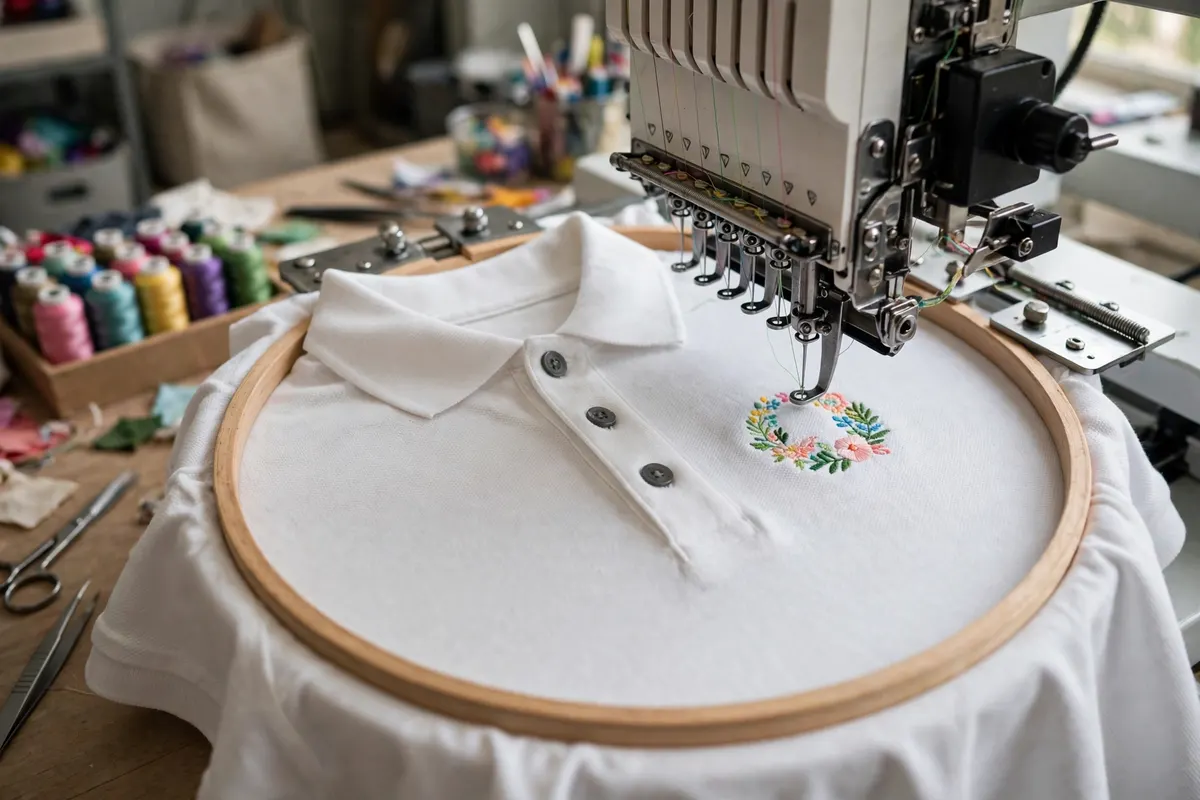
Polo fabric is a knit with a textured face, and it wants to move. As the needle lays down rows of thread, each row pulls the cloth a little toward the center of the design. Without a plan for that pull, circles sew as ovals, straight borders bow, and a ring of puckers forms around the finished logo — even when the hooping was done with care.
Our chest builds fight that pull in three ways. First, underlay: a base layer of stitches that ties the fabric to the stabilizer and gives top stitches a firm platform, so the design starts stable and stays stable. Second, pull compensation: shapes are drawn a touch wider than the art, so after the natural inward pull they land at the size you asked for. Third, a balanced sew order that works from the center outward, so tension spreads evenly instead of dragging to one side.
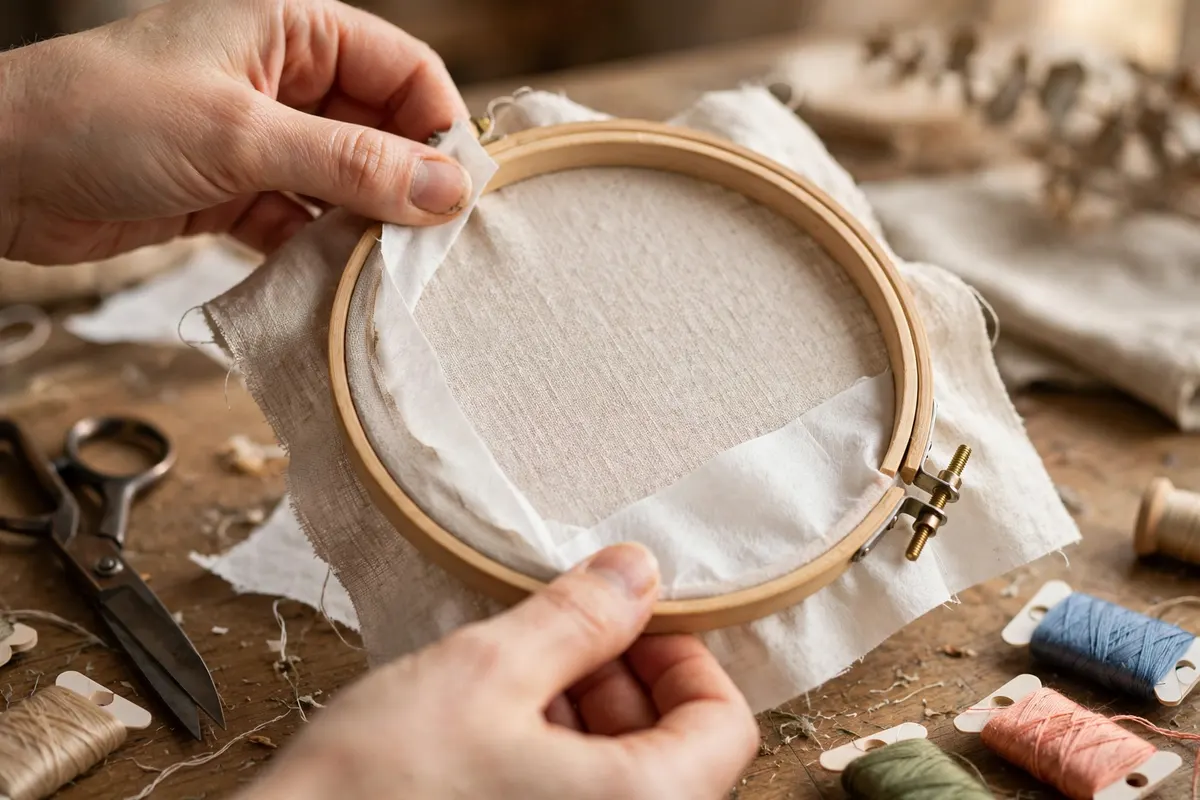
Hooping still matters on your end, and we will say plainly what helps: a firm hoop, the right cut-away stabilizer for knits, and no stretching of the shirt as it goes into the hoop. Stretch it in, and it will relax back after sewing and pucker around the design. The file and the hooping work as a pair, and our build assumes the standard, careful method.
If a test sew still shows a ripple, send us a photo. Most chest fixes are small — a density drop in one fill, a wider underlay, a touch more compensation — and revisions are free until the file runs clean on your shirts.
Names and titles are the soul of a chest design, and they are the first part to fail in a weak file. Thread is much thicker than ink. A letter that looks fine on a business card can turn into a solid blob at chest size if the spaces inside it are too small for a stitch to form and hold.
We set chest lettering by hand, letter by letter. Spacing is widened slightly so words do not merge. The counters — the enclosed spaces in letters like a, d, e and o — are opened beyond what the art shows, because sewing will close them partway. Where a satin column would be too narrow to hold, we use a clean run or a light fill that keeps the letter shape without the clog.
Font choice helps too. A plain, sturdy sans or a simple serif reads far better in thread than a script with hair-thin joins. If your brand font is fine and detailed, we can keep its feel at a slightly larger text size, or set the name line in a close match that sews clean. We will show you the trade-off in the preview, so the choice is yours and there is no surprise on the first shirt.
Two-line layouts get extra care. A name above a title needs clear space between the lines, or the rows crowd each other as they sew. We set that gap for thread, not for print, and align the block so it sits straight against the logo above it.

Each chest order delivers a file built for your shirt type and your machine, a preview image that shows the design at its real finished size, and a thread list in sew order. Seeing the design at true size in the preview matters: it is the honest way to judge whether a name line will read before you commit a box of shirts to it.
We deliver in DST, PES, EXP, JEF, VP3, XXX, HUS, EMB, CND and PXF. Standard delivery is 24 hours and rush delivery is 4–8 hours on request. Studio hours are Monday to Saturday, 9 AM to 9 PM PKT, and WhatsApp orders are welcome anytime.
Left chest designs up to 4.5 inches are $13 — the same simple anchor as a standard logo or cap design. If you later need the same artwork as a cap file, a cap version of an existing design is just $5.50. We confirm your final quote before work starts.
Short, clear steps from artwork to a shirt you can wear with pride.
Send the logo, any name or title text exactly as it should read, the shirt type, and the width you want. Spelling is copied from your message, so check names twice.
We confirm price and size, then you see the design at its real size. This is the moment to judge the lettering and ask for a size or font tweak.
Sew one shirt first and look at it worn, not just in the hoop. If the knit ripples or a letter closes, tell us and the fix is free.
The chest spot stays the same, but the cloth underneath changes the build.
Fleece has a soft, raised surface that can swallow short stitches. For fleece we raise the stitch profile a touch, use a stronger base so letters sit on top of the pile instead of sinking into it, and keep fine detail bold. The result reads clearly from a distance, which is what a fleece chest logo is for.
Scrub tops and light work shirts sit at the other end: thin, smooth fabric that shows every extra stitch. There the build goes lighter still, with care around the edges so the design does not outline itself with a stiff rim. Woven work shirts land in the middle — firmer than a polo knit, kinder to detail, and happy with a standard chest density as long as the underlay is right.
Whatever the garment, tell us about it when you order. “Polo” is enough to start, and a photo of the fabric label or the shirt itself settles any doubt. Matching the file to the cloth at the start is far cheaper than re-doing shirts after a run, and it is the main reason a made-for-chest file beats a generic logo file every time.
Other placements and builds that often go with chest work.
Most left chest designs finish between three and four and a half inches wide. That range is large enough for the logo and a name line to stay readable, and small enough to sit neatly above the pocket area without wrapping around the body. If your design is tall rather than wide, we balance height against width and show you the final size before we build.
A left chest design sits on a small, visible area of a garment that moves with the body. Heavy density makes that patch stiff, pulls the knit around it, and shows every ripple when the shirt is worn. Lighter density with solid underlay keeps the logo flat and flexible, covers the fabric well, and feels like part of the shirt instead of a badge stuck on it.
Yes, as long as the letters are tall enough to form in thread. As a guide, capital letters around five to six millimeters tall can stay readable with the right spacing and a clean font. We open the letter shapes, widen the gaps, and may suggest dropping a very fine tagline or making it one step larger so names and titles read clearly at a glance.
Left chest work suits polos, work shirts, scrub tops, light jackets, fleece and uniform tees. Each fabric needs its own density and underlay settings, so tell us the garment when you order. Pique knit, smooth cotton and soft fleece all sew well with a chest build. Very thin or very stretchy tops need a lighter file and the right stabilizer to stay flat.
Puckering usually comes from density, underlay and pull working against the knit. We lower density where the design allows, add underlay that locks the fabric to the stabilizer, and add pull compensation so shapes do not drag inward as they sew. We also keep the sew order balanced from the center out. A test sew on a spare polo confirms the fix before a full run.
Send your logo and shirt type on WhatsApp for a free quote. Chest designs up to 4.5 inches are $13, delivered in 24 hours with free revisions.