Names, text, and small designs digitized for narrow, curved sleeves — sized to sit straight on the arm, stitch clean, and stay comfortable to wear.
A chest design lives on a wide, mostly flat area. A sleeve design lives on a tube. That one fact changes everything about the digitizing. The usable flat area on most sleeves is only a few inches wide. Anything wider starts to climb around the curve of the arm, where it bends out of shape, hides from view, and fights the hoop the whole time it stitches.
The fabric moves differently too. Sleeves on hoodies, jerseys, and work shirts often stretch along the arm, and the tube shape makes hooping tighter and less forgiving than a flat chest. A file digitized for a chest and simply shrunk down for a sleeve keeps chest density, chest pull settings, and letter shapes that are too wide for the space. The result is a common set of problems: text that leans, letters that crowd, a sleeve that puckers or twists after stitching, and a design that looks straight in the hoop but crooked on the arm.
Sleeve digitizing fixes those problems at the plan stage. We size the design for the true flat width of your sleeve, shape letters and art for the long, narrow space, set lighter density where the fabric needs it, and add pull compensation for the curve. Tell us the garment, the sleeve spot — upper arm, forearm, or cuff — and whether the job is left sleeve, right sleeve, or both. Those details decide the setup, so the more you share up front, the cleaner the first stitch-out will be.
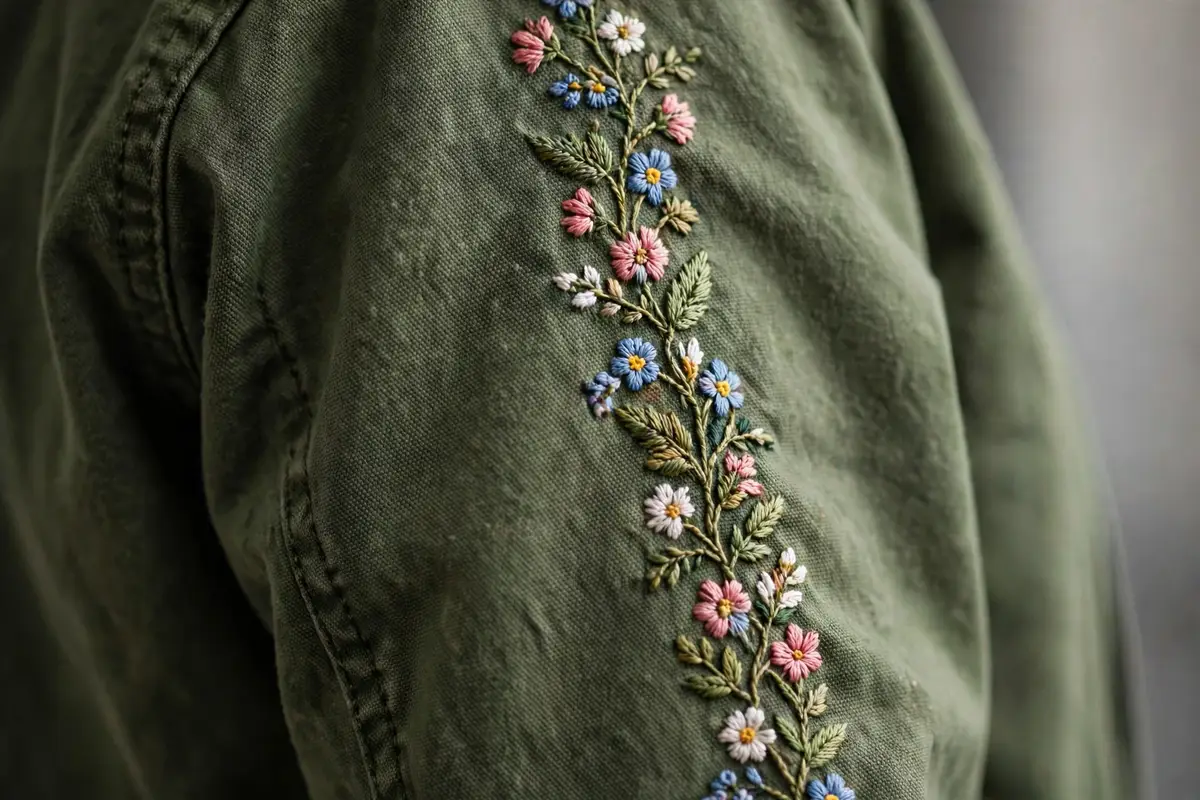
Text is the most common sleeve job, and it comes in two main forms. The first is a short name or word across the upper arm or near the cuff, read like a small chest mark turned sideways. The second is text running down the length of the arm, from near the shoulder toward the cuff. That long format suits team names, sponsor words, event names, and personal names on robes and hoodies.
Down-the-arm text needs clear choices before digitizing starts. Which way should it read? Most people want the text to read correctly when the arm hangs down at their side, but some designs read from cuff to shoulder on purpose. Left and right sleeves flip that logic, so a matching pair is not just one file used twice — each side needs its own direction check. Letter height also works differently in a long line. Letters that are too large eat the width and crowd the curve, while letters that are too small lose clarity on fleece and knit. We set height, spacing, and stroke width for your sleeve width and fabric, so the line reads cleanly from a normal viewing distance.
If the same name or logo already exists as a left chest file, do not assume it will drop onto a sleeve. We often build a sleeve version from the same artwork: narrower, re-spaced, and re-balanced for the tube shape. That keeps the set looking like family — chest and sleeves clearly matched — without forcing a flat design into a curved space where it does not belong.
Good sleeve work starts with honest sizing. As a working guide, most adult sleeve designs sit well between about 2 and 3.5 inches wide. Youth sleeves and slim-fit garments leave less room, while large work jackets leave a bit more. Length is more flexible than width: a down-the-arm design can run long as long as each letter or element stays inside the flat width. When your artwork is wider than the sleeve allows, shrinking alone is rarely the right answer. Wide art shrunk small loses its detail and its impact. A redrawn sleeve version — simpler shapes, bolder lines, fewer small parts — almost always looks better on the arm.
The curve gets its own plan. Stitching pulls fabric in the direction of the stitch, and on a tube that pull can twist the sleeve or make a straight line look bowed. We counter that with pull compensation shaped for the placement, stitch directions that work with the arm instead of across it where it counts, and density that holds the design without turning the sleeve stiff. Seams matter as well. If your placement crosses or sits near a sleeve seam, tell us. A design planned to sit cleanly on one panel looks far better than one fighting a seam ridge down its middle.
Fabric decides the last settings. Thick hoodie fleece takes a firm, clean stitch plan but hides very fine detail in its pile. Smooth jacket sleeves show detail well but show puckering just as well, so density must stay honest. Stretch jersey needs a lighter touch and the right underlay so the design moves with the sleeve instead of cracking the fabric around it. Name your garment when you order and we set the file for it, not for a generic sleeve.

Sleeves rarely come alone. A team order might need the same sleeve text on twenty hoodies, a name added under it for each player, or matching art on both arms. Planning the set as one job keeps every sleeve consistent. We build a base layout with fixed letter height, spacing, and placement marks, then swap the personal name or number into that layout for each garment. Every sleeve in the batch then lines up the same way, instead of drifting a little with each new file.
Left and right pairs get the same care. A logo that faces forward on the right arm must face forward on the left arm too, which can mean mirroring the art and re-checking any text direction. Numbers and flags have their own facing rules on uniforms. If your pair has a rule like that, tell us before we start. Fixing direction in the plan takes a minute. Fixing it after a full batch has stitched costs much more.
For repeat orders over time — a new hire, a new player, a replacement hoodie — keep your approved sleeve file and its size notes together. Send them back to us with the new name or garment change, and we will match the original setup so the new sleeve sits with the old ones as if they were made together. If the garment model changes, say so: a new sleeve width or fabric can need a small setup change even when the artwork stays the same.
Every sleeve order is digitized by hand for your garment, placement, and arm size:
Sleeve designs are priced on our standard rates: $13 for designs up to 4.5 inches, $23 up to 8 inches. Your final quote is confirmed before work starts.
Tell us the garment and the sleeve spot first. Placement facts matter more for sleeves than for almost any other job.
Message us on WhatsApp with your text or art, garment type, and upper arm, forearm, or cuff placement.
We confirm width, text direction, and left or right setup, then confirm your price before we start.
Stitch one sleeve and check it on the arm. Revisions are free until the file runs clean.
Read How It Works for the full process, or view pricing.
Sleeve work is usually part of a full garment set. These services complete the set.
Most sleeve designs work best between about 2 and 3.5 inches wide, depending on the arm size and where the design sits. Wider designs start to wrap around the curve of the arm, which bends the artwork and makes hooping hard. Tell us the garment type and arm size, and we will size the design so it sits flat and reads straight when worn.
Names, short text, numbers, small logos, and simple vertical designs suit sleeves best. The space is long and narrow, so artwork that follows that shape looks natural instead of squeezed. Wide logos and detailed scenes do not fit well and often need a simpler version for the sleeve. Send your artwork and we will tell you if it fits as-is or needs a sleeve version.
Yes. Text running down the arm is one of the most common sleeve jobs. We set the letter size, spacing, and direction so the words read clearly when the arm hangs naturally. Tell us if the text should read from shoulder to cuff or cuff to shoulder, and whether it goes on the left sleeve, right sleeve, or both, since that changes the setup.
A sleeve is a tube, so flat artwork can look bent once it is on the arm. We size the design for the flat area of the sleeve, add the right pull compensation for the curve and fabric, and keep density light enough that the sleeve does not pucker or twist. Tell us the garment and placement, and we build for that curve instead of treating the sleeve like a flat chest.
Hoodies, sweatshirts, jackets, team jerseys, work shirts, and robes all take sleeve embroidery well. Cuffs, forearms, and upper arms are common spots. Very thin or very stretchy sleeves need lighter stitching and careful hooping, and tiny youth sleeves leave less room than adult sizes. Tell us the garment type and size range, and we will set the design up for it.
Send your text or artwork with your garment details on WhatsApp for a free quote. Delivered in 24 hours as standard.
Order Sleeve Digitizing on WhatsApp